HomeDestinationsContinentsCountriesBlog

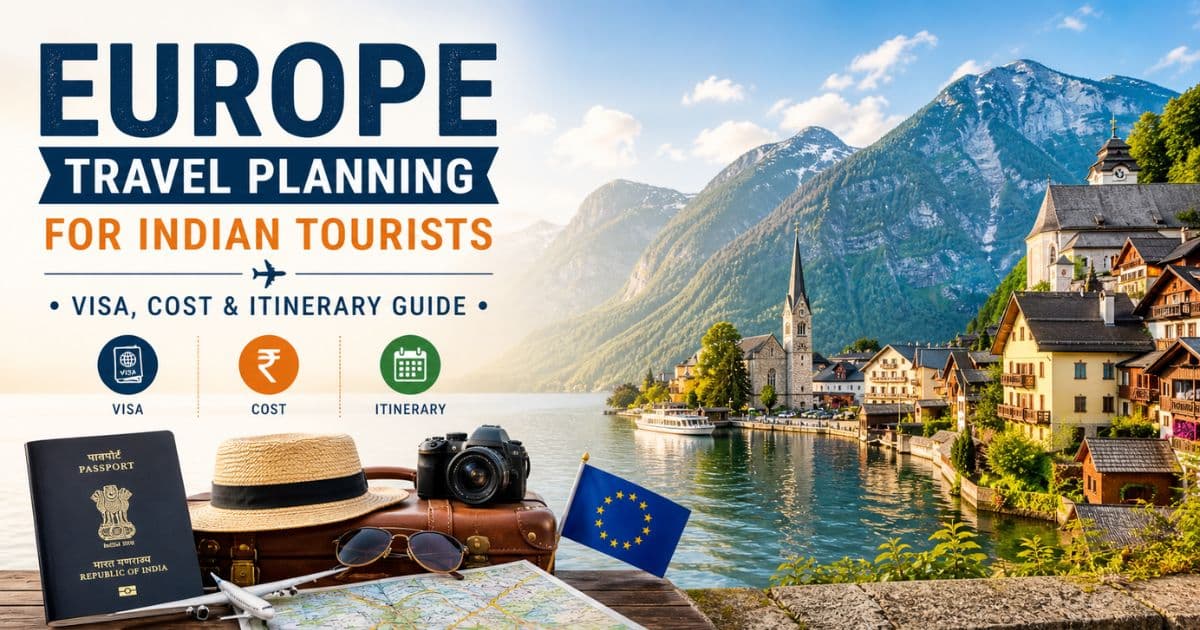
Europe Travel Planning for Indian Tourists – Visa, Cost & Itinerary Guide

ShaileshShailesh
Travel Guides
Europe travel guide
Europe travel guide

Europe travel planning for Indian tourists has never been more popular. Every year, millions of Indians dream of walking through the streets of Paris, taking a scenic train across the Swiss Alps, or eating fresh pasta in Rome. Europe offers an extraordinary mix of history, culture, natural beauty, and modern experiences all within a relatively compact geography that makes multi-country travel very practical.

In this guide you will learn how to plan a Europe trip from India step by step covering the Schengen visa process, travel costs, a sample 10-day itinerary, budget tips, and packing advice. Whether you are planning a solo adventure, a honeymoon, or a family holiday, this guide gives you everything you need to get started with confidence.

If the UK is on your list, explore our Best Places to Visit in the UK – Top Cities & Travel Guide.

Europe Travel Planning for Indian Tourists – Quick Overview

Europe has been one of the top international destinations for Indian travellers for decades. The combination of iconic cities, stunning countryside, efficient rail networks, and rich cultural history makes it unlike anywhere else in the world.

Indians travel to Europe for a wide range of reasons:

  • Honeymoon couples drawn to the romance of Paris, Venice, and Santorini
  • Families looking for a mix of theme parks, historical sites, and safe cities
  • Budget travellers exploring Eastern Europe on a shoestring
  • Luxury travellers staying in five-star hotels in Switzerland and Monaco

The Schengen Area a group of 27 European countries that share open borders is the key travel zone for most Indian tourists. A single Schengen visa allows you to move freely between member countries, which makes planning a multi-country Europe trip far simpler than it sounds.

Best Countries to Visit in Europe for Indian Tourists

Choosing the right countries is the first major decision in any Europe trip itinerary from India. Here are the most popular and rewarding destinations for Indian travellers.

France

France remains the most visited country in the world, and for good reason. Paris alone is enough to fill several days with iconic sights, world-class food, and extraordinary culture.

  • Paris – The Eiffel Tower, Notre-Dame Cathedral, the Louvre, and Montmartre are just the beginning. Walk along the Seine, explore local cafes, and spend an afternoon at the Palace of Versailles just outside the city.
  • Eiffel Tower – Book tickets in advance online to avoid long queues. The summit offers a stunning view of the entire city.
  • Culture – French culture places high value on food, fashion, and art. Indian visitors often appreciate the wide availability of vegetarian options in Paris, particularly around the Marais neighbourhood.

Switzerland

Switzerland is consistently one of the most popular Europe destinations for Indian honeymooners and families. The scenery snow-capped mountains, crystal-clear lakes, and green valleys feels almost cinematic.

  • Mountains – Jungfraujoch (the "Top of Europe"), the Matterhorn near Zermatt, and Mount Titlis near Engelberg are the most visited mountain attractions.
  • Scenic trains – The Glacier Express and Bernina Express are two of the world's most beautiful train journeys. The Swiss Travel Pass offers unlimited travel on these trains and is highly recommended.
  • Nature – Lake Geneva, Lake Lucerne, and Interlaken's twin lakes offer peaceful walks and boat rides that are hard to match anywhere in the world.

Italy

Italy is a country that engages every sense the food, the art, the architecture, and the warm southern light are all unforgettable.

  • Rome – The Colosseum, the Vatican, the Trevi Fountain, and the Pantheon can keep you busy for three full days. Book Vatican and Colosseum tickets well in advance, especially in summer.
  • Venice – A city built on water, best explored on foot and by vaporetto (water bus). The Grand Canal, St. Mark's Square, and the Rialto Bridge are the main highlights.
  • Food – Italian food is largely vegetarian-friendly. Fresh pasta, pizza, risotto, and gelato are everywhere. Indian travellers with dietary restrictions generally find Italy easier than many other European countries.

Germany

Germany is often underrated on Indian travel itineraries, but it offers a compelling mix of modern cities, medieval castles, and fascinating history.

  • Cities – Berlin, Munich, Hamburg, and Cologne each have a distinct character. Berlin's history, nightlife, and art scene make it especially compelling for young travellers.
  • History – Germany wears its history openly from the Berlin Wall to the Brandenburg Gate and the Memorial to the Murdered Jews of Europe. These are sobering but important places to visit.
  • Castles – Neuschwanstein Castle in Bavaria is one of the most photographed buildings in the world and worth a day trip from Munich.

Netherlands

The Netherlands is a compact, friendly, and beautifully organised country that is easy to navigate and rewarding to explore.

  • Amsterdam – The Anne Frank House, the Van Gogh Museum, the Rijksmuseum, and the famous canal ring are the top attractions. The city is best explored on foot or by bicycle.
  • Canals – Amsterdam's historic canal district is a UNESCO World Heritage Site. An evening canal boat cruise is one of the most enjoyable experiences in the city.
  • Tulips – If you visit between late March and mid-May, the Keukenhof Gardens near Lisse display millions of tulips in full bloom a spectacular sight.
For a detailed experience in the UK capital, check our London Travel Guide – Top Attractions, Itinerary & Tips.

Europe Visa Guide for Indians (Schengen Visa)

Understanding the Schengen visa process for Indians is essential before any planning begins. Indian passport holders need a Schengen visa to enter the Schengen Area, which covers most of Western and Central Europe.

What is the Schengen Visa?

The Schengen Visa is a short-stay visa that allows holders to travel freely within the 27 Schengen member countries for up to 90 days within any 180-day period. It is the most commonly applied-for visa type for Indian tourists travelling to Europe.

Documents required for Europe visa from India:

  • Valid Indian passport with at least two blank pages and validity of at least three months beyond your travel dates
  • Completed Schengen visa application form
  • Two recent passport-sized photographs meeting Schengen specifications
  • Travel insurance with minimum coverage of EUR 30,000 covering the entire Schengen area
  • Confirmed return flight tickets
  • Hotel bookings or accommodation proof for the entire trip
  • Bank statements for the last three to six months showing sufficient funds
  • Income proof salary slips, ITR, or business documents depending on employment status
  • Leave letter from employer or proof of business registration
  • Cover letter explaining your travel plans

Application process:

Apply at the embassy or consulate of the country where you will spend the most days. If you are spending equal time in multiple countries, apply at the consulate of your first port of entry. Many countries use VFS Global centres in Indian cities to accept applications.

Processing time:

Standard processing takes 15 working days. It is advisable to apply at least four to six weeks before your planned travel date. Peak summer months (June to August) see longer processing times, so apply earlier if travelling then.

How to Plan a Europe Trip from India (Step-by-Step)

Here is a clear, step-by-step breakdown of how to plan Europe trip from India in the right order.

  • Step 1 – Set your budget – Decide your total trip budget before anything else. A moderate Europe trip from India typically costs between INR 1.5 lakh and INR 3 lakh per person for 10 days, including flights. Luxury trips can go significantly higher.
  • Step 2 – Choose your countries and duration – For a first-time Europe trip, limit yourself to three or four countries. Spending too little time in each country means you only scratch the surface. Two days per major city is the practical minimum.
  • Step 3 – Book flights early – Flights from major Indian cities (Mumbai, Delhi, Bengaluru, Chennai) to European hubs are available year-round. Book three to four months in advance for the best prices. Paris, Amsterdam, Frankfurt, and Rome are common entry points.
  • Step 4 – Plan accommodation – Book hotels or hostels as soon as your itinerary is fixed. Central locations save time and transport costs. Use booking platforms that offer free cancellation during the planning stage in case plans change.
  • Step 5 – Get travel insurance – This is mandatory for the Schengen visa application and genuinely important for your own protection. Choose a policy that covers medical emergencies, trip cancellation, and lost luggage.

Europe Travel Itinerary (Sample Plan)

10-Day Europe Itinerary for Indians

This sample 10 day Europe itinerary for Indians covers five of the most popular destinations and is designed to flow efficiently using trains and short flights.

Day 1–2: Paris, France

  • Day 1: Arrive in Paris. Check in and explore the Eiffel Tower area and Champ de Mars in the evening
  • Day 2: Visit the Louvre in the morning, Montmartre in the afternoon, and the Seine riverside at dusk

Day 3–4: Switzerland

  • Day 3: Take the TGV train or flight to Zurich or Geneva. Head to Interlaken or Lucerne. Take a lake cruise
  • Day 4: Day trip to Mount Titlis or Jungfraujoch depending on weather. Evening in the old town of Lucerne

Day 5–6: Italy

  • Day 5: Travel to Milan by train. Walk around the Duomo and Galleria Vittorio Emanuele II. Take an evening train to Rome
  • Day 6: Full day in Rome Colosseum, Roman Forum, Trevi Fountain, and Vatican (book in advance)

Day 7–8: Germany

  • Day 7: Fly to Munich. Visit Marienplatz, the English Garden, and the BMW Museum
  • Day 8: Day trip to Neuschwanstein Castle. Return to Munich for dinner in the Viktualienmarkt area

Day 9–10: Amsterdam, Netherlands

  • Day 9: Fly or take a train to Amsterdam. Explore the canal ring, Anne Frank House, and Jordaan neighbourhood
  • Day 10: Visit the Van Gogh Museum or Rijksmuseum in the morning. Afternoon free for shopping and final exploration before your return flight
Planning a Scotland trip? Follow our Scotland Travel Itinerary Guide – 7 Day Plan, Routes & Tips.

Europe Trip Cost from India

Europe travel cost for Indian tourists varies widely depending on travel style, season, and the countries you visit. Here is a realistic breakdown for a 10-day trip.

  • Flights – Return flights from major Indian cities to Europe range from INR 50,000 to INR 90,000 per person depending on the airline, season, and how far in advance you book. Budget airlines like IndiGo (to select European cities), Air India, and connecting flights via Middle Eastern carriers are common options.
  • Visa – The Schengen visa fee is EUR 90 (approximately INR 8,000 to INR 8,500 as of 2024) plus VFS service charges of around INR 1,500 to INR 2,000.
  • Hotels – Budget hotels and hostels cost EUR 30 to EUR 60 per night. Mid-range hotels range from EUR 80 to EUR 150 per night. Costs vary significantly by city Switzerland and Paris are the most expensive; smaller Italian and German cities are more affordable.
  • Daily expenses – Budget approximately EUR 50 to EUR 80 per person per day for food, local transport, and attraction entry. Western Europe (Switzerland, France) tends to be pricier than Central Europe (Germany, Netherlands).

In total, a moderate 10-day Europe trip from India typically costs between INR 1.8 lakh and INR 2.5 lakh per person including flights, visa, accommodation, and daily spending.

Budget Travel Tips for Europe

A budget Europe trip from India is absolutely achievable. These tips will help you get the most from your money without compromising the quality of your experience.

  • Book early – Flights, trains, and popular attractions are significantly cheaper when booked weeks or months in advance. The Eurostar (London to Paris), TGV (France), and Thalys (Paris to Amsterdam) trains have discounted early-bird fares.
  • Use rail passes – The Eurail Global Pass or country-specific passes offer unlimited train travel and are cost-effective for multi-country trips. Compare pass prices against point-to-point ticket prices before buying.
  • Choose budget stays – Reputable hostels in Europe are clean and well-managed. Many offer private rooms as well as dormitories. Apartment rentals through platforms like Airbnb can also be economical for families or groups.
  • Travel off-season – Visiting in March to May or September to October means lower hotel prices, shorter queues at attractions, and more pleasant temperatures than the peak summer months.
  • Eat smart – Supermarket lunch deals, street food, and local market stalls cost a fraction of restaurant prices. In Italy, a pizza slice from a bakery costs EUR 2 to EUR 3. In Paris, a boulangerie sandwich is around EUR 4 to EUR 5.

Packing List for Europe Trip (Indian Travelers)

Packing smart makes a real difference on a multi-country trip. Here is a practical Europe trip packing list for Indians.

Clothes:

  • Light layers for spring and autumn temperatures can shift significantly throughout the day
  • A warm, compact down jacket or fleece for Switzerland and higher altitudes
  • Comfortable, well-worn walking shoes you will cover 10 to 15 kilometres per day on foot
  • One smart casual outfit for nicer restaurants or evening outings
  • A compact, foldable rain jacket or umbrella

Documents:

  • Passport (original plus photocopies)
  • Schengen visa (original plus photocopies)
  • Printed copies of all hotel bookings, flight tickets, and travel insurance
  • International driving permit if you plan to hire a car
  • Emergency contact list and copies stored separately from originals

Essentials:

  • Universal travel adaptor (Europe uses Type C/E/F plugs)
  • Power bank for long days of sightseeing
  • International SIM card or a roaming plan activated before departure
  • Any prescription medications with a doctor's note
  • Small first aid kit paracetamol, band-aids, antacids, and a rehydration sachet
  • Instant Indian food packets (cup noodles, ready-to-eat meals) for days when you crave a taste of home

Travel Tips for First-Time Indian Tourists

First-time travellers often have questions about the practical side of being in Europe as an Indian tourist. Here are the most useful things to know.

  • Currency and payments – Most of the countries in this itinerary use the Euro (EUR). Switzerland uses the Swiss Franc (CHF). Credit and debit cards are accepted almost everywhere, but carry some cash for smaller shops, markets, and rural areas. Notify your Indian bank before departure to avoid cards being blocked for international transactions.
  • Language tips – English is widely spoken in tourist areas across Western Europe. Learning five to ten basic words in the local language (bonjour, grazie, danke) goes a long way in showing respect and often results in warmer service.
  • Safety tips – Europe is generally very safe for tourists. The most common risk is petty theft pickpockets operate around major tourist attractions, busy train stations, and crowded transport. Use a crossbody bag, keep your phone in your front pocket, and be alert in crowded spaces.
  • Cultural differences – Europeans value personal space and quiet in public settings. Keep your voice at a moderate level in restaurants, museums, and on public transport. Tipping customs vary in France it is appreciated but not mandatory; in Germany rounding up the bill is common; in the Netherlands tipping is less standard than in India or the US.

Indian travellers who are also planning to include the UK in their trip should note that the UK is not part of the Schengen Area and requires a separate Standard Visitor Visa. Our **London travel guide for first time visitors** covers that process in detail.

Latest Travel Trends (Europe and India)

The way Indian tourists travel to Europe is changing. Here are the biggest trends shaping Europe travel planning for Indian tourists today.

  • Solo travel – An increasing number of young Indian professionals particularly women are choosing solo trips to Europe. The continent's safety, well-connected transport, and strong hostel culture make it one of the most accessible solo travel destinations in the world.
  • Digital nomads – With remote work now mainstream, many Indian professionals are extending short holidays into month-long stays in European cities. Countries like Portugal and Estonia offer special digital nomad visas to facilitate this.
  • AI travel planning – AI-based tools are increasingly used by Indian travellers to build custom itineraries, compare flight prices in real time, find vegetarian restaurants near any location, and get answers to visa questions. These tools are making independent travel more accessible for first-timers.
  • Budget travel growth – The rise of budget airlines, overnight trains, and affordable hostel chains has made Europe more financially accessible to middle-class Indian travellers who might have previously thought it out of reach.

People Also Ask

How much does a Europe trip cost from India?

A 10-day moderate Europe trip from India costs approximately INR 1.8 lakh to INR 2.5 lakh per person, including return flights, Schengen visa, accommodation, and daily expenses. Costs vary by season and travel style.

Is the Schengen visa difficult for Indians?

The Schengen visa process for Indians is straightforward if you apply with complete documentation and sufficient lead time. The most common reasons for rejection are insufficient funds in bank statements, incomplete documents, or unclear travel plans. A well-prepared application with a clear itinerary and hotel bookings significantly improves approval chances.

Which is the cheapest country in Europe for Indian tourists?

Eastern European countries such as Hungary (Budapest), Czech Republic (Prague), Poland (Kraków), and Romania (Bucharest) are the most budget-friendly options in Europe. They are part of the Schengen Area, well-connected to Western Europe by train, and offer excellent value for food, accommodation, and attractions.

How many days are enough for a Europe trip?

A minimum of 10 days is recommended for a first-time Europe trip covering three to four countries. Seven days is possible but limiting. If your leave allows, 14 days gives you a much more relaxed experience with time to explore beyond the main tourist sites.

Conclusion

Europe remains one of the most rewarding travel destinations an Indian tourist can visit. The combination of history, natural beauty, diverse cultures, and efficient travel infrastructure makes it ideal for nearly every type of traveller.

With the right planning a well-prepared visa application, an early flight booking, a practical itinerary, and a realistic budget a Europe trip from India is very achievable. Start with the countries that excite you most, keep your itinerary realistic, and build in at least one unplanned afternoon in every city to simply walk and discover.

For travellers who want to extend their Europe trip to include Britain, the **complete London travel guide** is an excellent companion resource to plan that part of your journey alongside this guide.

Start planning your Europe trip from India today use this guide to build your perfect itinerary and explore more destination-specific guides on Travel Nexus World to make every destination count.

Frequently Asked Questions

Find answers to common questions

About the Author

Shailesh

Shailesh

Author

Related Posts

London Travel Guide – Top Attractions, Itinerary & Tips

London Travel Guide – Top Attractions, Itinerary & Tips

Explore London with top attractions, itinerary ideas, travel tips, and culture i...

Best Places to Visit in the UK – Top Cities & UK Travel Guide

Best Places to Visit in the UK – Top Cities & UK Travel Guide

Explore the UK with top cities, travel tips, and itinerary ideas. Plan your perf...

Best Places to Visit in India – Top Cities & Travel Guide | Travel Nexus World

Best Places to Visit in India – Top Cities & Travel Guide | Travel Nexus World

Discover the best places to visit in India with our complete travel guide. Top c...