
HomeDestinationsContinentsCountriesBlog

How to spend 3 days in Split Croatia – complete travel guide 2026

Shailesh
Shailesh
Travel Guides
How to spend 3 days in Split Croatia

Figuring out how to spend 3 days in Split Croatia is one of those planning problems that sounds harder than it actually is. Split is a city that makes sense quickly. The old town is compact enough to cover on foot in an afternoon, the beaches are minutes away, and the islands are right there, just a short ferry ride across the Adriatic. Three days is genuinely enough to get a real feel for the place, as long as you don't waste time being indecisive.

This guide gives you a day-by-day plan, the honest cost picture, where to stay, and what to skip.

Split Croatia travel guide – quick overview

Split is Croatia's second-largest city, sitting on a peninsula that juts into the Adriatic Sea. About 170,000 people live there. The old town is built inside and around a 4th-century Roman palace, which means you're literally walking through ancient walls when you go to dinner.

It pulls in beach lovers, history people, and island-hoppers. That combination makes it one of the more interesting short-trip destinations in southern Europe. And because it's a real working city rather than a pure tourist resort, it has a texture that places like Dubrovnik sometimes lose in peak season.

Split Croatia itinerary

How to reach Split Croatia

Split Airport (SPU) is about 25 km from the city centre. Direct flights run from most major UK airports, plus many European hubs. Ryanair, easyJet, and British Airways all serve Split in summer. From India, you'll connect through one of the major European hubs: Amsterdam, Frankfurt, Vienna, or Istanbul.

From the airport, a taxi to the city centre costs around €30 to €40. The public bus (line 37) costs about €5 and drops you near the city centre ferry terminal, which is the most useful arrival point if you're staying in or near the old town. Book the bus ticket inside the airport before you board.

Split also has a large ferry port connecting it to the islands and to Italy (Ancona, Pescara). If you're coming from Italy by sea, you'll dock right in the heart of the city. Ferries from Dubrovnik take around 4 to 5 hours and are a scenic option if you're doing a broader Croatia trip.

Where to stay in Split Croatia

Old Town area

Staying inside or directly next to the old town puts you within 5 minutes of everything on the historical sightseeing list. The streets inside Diocletian's Palace are atmospheric and quiet at night once the day-trippers leave. Boutique apartments and small hotels fill the old buildings. Prices run from around €80 to €180 per night for mid-range options in summer.

Beachfront hotels

The stretch towards Bačvice Beach and the Meje neighbourhood has larger hotels with pools and easier beach access. This area is a 15 to 20-minute walk from the old town, or a short taxi ride. Good if the beach is your main priority and you don't mind slightly longer walks to the historical sites.

Budget hostels and apartments

Split has a solid range of hostels, particularly around the bus and ferry terminal area. Dorm beds run €15 to €30 per night in summer. Private rooms in apartments booked through Airbnb or Booking.com often give better value than hotels, especially for groups of 2 or more. Many are inside or right next to the old town walls.

Day 1 – explore Split old town

Diocletian's Palace

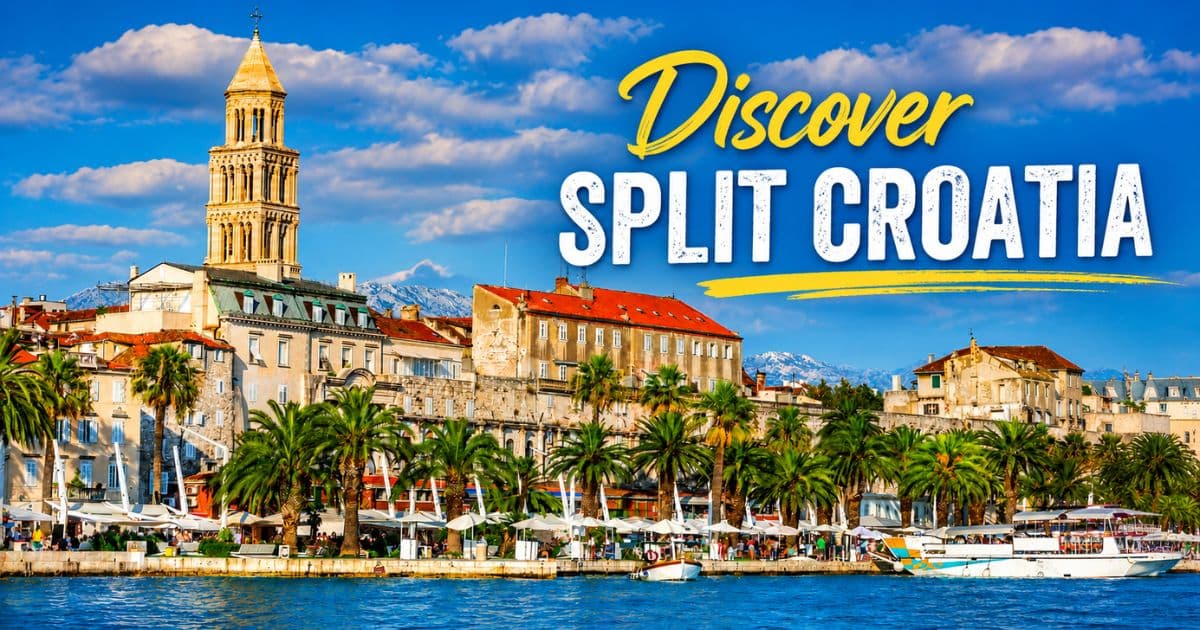
Start here. Diocletian's Palace is a 4th-century Roman emperor's retirement complex that now has around 3,000 people living inside it. Restaurants, bars, apartments, and shops fill the ancient rooms and cellars. It's one of the best-preserved Roman structures in the world.

The Peristyle, the central square of the palace, is the most striking space. Walking through the Golden Gate on the north side or the Silver Gate on the east gives you a real sense of the scale. Entry to the palace area is free. You roam the streets, wander into courtyards, and eat lunch where Roman emperors once walked. The underground cellars cost a small entry fee (around €10) and are worth it for the scale of the vaulted spaces.

Riva Promenade

The Riva is the waterfront promenade running along the south wall of the palace, facing the harbour. It's the social spine of Split. Locals and tourists mix on the café terraces in the morning, the boats bob in the harbour, and the light off the water in the afternoon is genuinely beautiful. Walk it slowly.

Cathedral of Saint Domnius

Sitting inside the palace walls, the Cathedral of Saint Domnius has one of the better historical twists in European religious architecture: it was originally built as Diocletian's mausoleum, then converted into a Christian church centuries later. The campanile (bell tower) is climbable for views over the old town rooftops. Entry including the tower is around €10.

Split old town cafes and restaurants

The streets inside the palace walls have a mix of tourist-facing restaurants and locals-first spots. For dinner, head to Konoba Matejuška near the Vestibule or explore the narrow lanes west of the palace towards Varoš neighbourhood, where the restaurants tend to be less crowded and better priced. Try the local fish dishes: prstaci (date mussels) are a specialty, though ordering sea bass or bream simply grilled with olive oil and lemon is hard to go wrong.

Split Croatia itinerary

Day 2 – beaches and island adventures

Bačvice Beach

Start the morning at Bačvice, the city's most famous beach, a 10-minute walk south-east of the old town. It's a sandy bay (rare on this coastline, which is mostly pebble and rock), and it's where locals play picigin, a traditional Croatian ball game played in shallow water that looks chaotic and apparently requires years to learn. The beach gets busy by 10 AM in summer. Go early.

Boat tours

Split's harbour is the departure point for dozens of daily boat tours. The Blue Lagoon tour is the most popular, a half-day trip to the crystal-clear lagoon near Drvenik Mali island, usually with snorkelling stops. Prices run around €30 to €50 per person. Longer full-day island-hopping tours cost €50 to €80 and typically include Hvar, Brač, and the Blue Lagoon. Book these the evening before from the stalls along the Riva.

Hvar or Blue Lagoon day trip

If you're doing a full-day island trip, Hvar is the most rewarding choice. The town of Hvar has a beautiful old square, a 16th-century Spanish fortress above it, and good restaurants. Regular ferries from Split to Hvar Town take about 1 hour. The last ferry back is in the evening, so check times when you arrive. Hvar can also be reached by catamaran (faster, around 50 minutes) from the Split ferry terminal.

For a Split Croatia island hopping guide, Brač (home to Zlatni Rat beach, the famous arrow-shaped spit of sand), Vis, and Šolta are all reachable as day trips from the main port.

Sunset views

Back in the city by early evening, walk up to the Bačvice area viewpoint or find a spot along the Riva facing west. The Adriatic sunsets in summer are genuinely worth stopping for. The colours run orange-pink across the harbour and reflect off the palace walls. Grab a drink from one of the Riva cafes and don't rush this part.

Split Croatia itinerary

Day 3 – local culture and hidden gems

Marjan Hill

Marjan is a forested hill on the west end of the Split peninsula, a protected nature park with walking paths, viewpoints, and a few small chapels. The climb from the old town takes about 20 to 30 minutes on foot. The views from the top take in the city, the islands, and on clear days the mountains of Bosnia in the distance. Go in the morning before it gets hot.

Local markets

The Green Market (Pazar) runs every morning just outside the eastern wall of Diocletian's Palace on Marmontova. It's where Split's residents actually shop: fresh fruit, vegetables, cheese, olive oil, lavender from Hvar, and local honey. Good for picking up food to eat on the go and interesting to walk through even if you're not buying much.

Croatian food experience

Use Day 3 to try the things you might have walked past on Days 1 and 2. Peka is a slow-cooked meat and vegetable dish prepared under a bell-shaped lid covered in hot coals; it needs to be ordered 24 hours in advance at most restaurants but is worth the planning. Pasticada is a Dalmatian beef stew cooked in wine and prunes, usually served with gnocchi. For something quick and cheap, burek (layered pastry filled with cheese or meat) from a bakery costs around €1.50 and makes a perfect morning snack after Marjan Hill.

Shopping and souvenirs

The narrow streets inside and around the palace walls have small shops selling olive oil, local wine, lavender products, and handmade lace. The lace from the island of Pag is UNESCO-listed and sold at a few specialist shops. Avoid the mass-produced tourist items near the main gates and look for the smaller, owner-run shops tucked into the side streets.

Split Croatia itinerary

Is 3 days enough for Split Croatia?

For the city itself, yes. You can walk most of the old town in a few hours, hit the main beaches, and do one good island day trip in 3 days without feeling like you're rushing. The palace, the Riva, Marjan Hill, and at least 1 island are all achievable.

Where 3 days starts to feel short is if you want to explore multiple islands or go deeper into the Dalmatian interior. Krka National Park is 1.5 hours by bus, and Plitvice Lakes (one of Croatia's most famous natural attractions) is a 3-hour drive. Both need a dedicated day each.

Can you spend more than 3 days in Split?

A 2-day quick trip is possible if you're on a tight schedule. Focus on Diocletian's Palace on Day 1 and one island day trip on Day 2. You'll miss Marjan Hill and the slower food experiences, but you'll get the core of it.

A 4-day trip lets you add Krka National Park as a full day, which is genuinely one of the most beautiful places in Croatia and shouldn't be skipped if you have the time. The waterfalls there are extraordinary.

A 7-day **Croatia coastal itinerary** that starts in Split and ends in Dubrovnik works very well. Spend 3 nights in Split, take the ferry to Hvar for 2 nights, then continue to Dubrovnik for 2 nights. The inter-island ferries connect it all without needing to backtrack.

Split Croatia itinerary

Best things to do in Split Croatia

  • Walking the palace walls and cellars at your own pace, ideally in the morning before tour groups arrive
  • Island hopping by ferry to Brač, Hvar, or Vis for a full day
  • Climbing Marjan Hill for the view over the city and coast
  • Watching picigin on Bačvice Beach in the morning (locals play daily in summer)
  • Eating dinner in Varoš, the old fishermen's neighbourhood west of the palace, which has good traditional restaurants away from the tourist core
  • Catching the evening atmosphere on the Peristyle, the palace's central square, where people sit on the steps with drinks and watch the world go by

Split Croatia budget guide

Croatia switched to the Euro in January 2023, so you're dealing with a straightforward European currency now.

  • Accommodation: Hostels €15 to €30 per night. Mid-range apartments €60 to €120. Hotels in the old town €100 to €200+.
  • Food: A meal at a local konoba (traditional restaurant) runs €15 to €25 per person including a drink. Pizza and pasta places are cheaper, €8 to €12. Bakery breakfast costs €2 to €4.
  • Activities: Most beaches are free. Diocletian's Palace cellars cost around €10. Island day trips run €30 to €80 depending on duration. Marjan Hill is free.
  • Transport: Local buses are around €1.50 per trip. Taxis across the city cost €5 to €15. Airport transfer €30 to €40 by taxi or €5 by bus.

A comfortable mid-range budget for 3 days in Split runs roughly €150 to €250 per person per day including accommodation. Budget travellers staying in hostels and eating local can manage on €70 to €100 per day.

Split Croatia itinerary

Best time to visit Split Croatia

July and August are the peak months. The weather is hot (30 to 35 degrees Celsius), the sea is warm, and the city is full. Prices are highest and accommodation needs to be booked weeks in advance. The nightlife and beach scene are at their most lively.

June and September are the best months overall. Temperatures are still warm enough for swimming (mid to high 20s), prices drop noticeably after the school holiday crowds thin, and the city feels more relaxed. September in particular is excellent: the sea has had all summer to warm up, the crowds are gone, and the light is beautiful.

May and October work for people who want culture and walking over beach time. The sea is cooler (18 to 22 degrees), but the old town, Marjan Hill, and the island interiors are all enjoyable. Hotels are significantly cheaper.

Split Croatia itinerary

Travel tips for first-time visitors

  • Currency: Croatia uses the Euro since January 2023. ATMs are widely available in Split city centre.
  • Safety: Split is a safe city. Standard urban precautions apply: watch your belongings in crowded areas, especially on the Riva and inside the palace during busy periods.
  • Local transport: The old town is entirely walkable. Taxis are available via the Bolt app (usually cheaper than street taxis). Buses connect the city centre to the airport and to further suburbs.
  • Ferry booking: Jadrolinija is the main state ferry operator. For popular routes (Split to Hvar in peak summer), buy tickets the morning of travel or the evening before. The car ferry and the catamaran to Hvar run on different schedules; the catamaran goes to Hvar Town, the car ferry goes to Stari Grad on Hvar (a different, quieter town). Check which you want.
  • Language: Croatian is the local language. English is widely spoken by anyone working in tourism. A few words of Croatian (hvala means thank you) are appreciated.
Split Croatia itinerary

People also ask

Is 3 days enough in Split Croatia?

Yes, for the main city highlights plus one island day trip. If you want to visit multiple islands or Krka National Park, 4 to 5 days is more comfortable.

What is Split Croatia famous for?

Diocletian's Palace, the Dalmatian coastline, island ferry connections, and being a base for exploring central Dalmatia. It's also where parts of Game of Thrones were filmed, specifically Mereen, which brings in a fair amount of film tourism.

Is Split expensive for tourists?

Mid-range by European standards. Cheaper than Dubrovnik but more expensive than, say, Albania or Montenegro. Peak summer prices (July to August) are notably higher than shoulder season.

What are the best islands near Split?

Hvar for restaurants, history, and nightlife. Brač for Zlatni Rat beach. Vis for an quieter, less touristed experience. Šolta for a local-feeling day trip without large crowds.

Suggested 3-day Split itinerary timeline

Day 1

  • Morning: Arrive, check in, walk the palace cellars and Peristyle
  • Afternoon: Cathedral of Saint Domnius and bell tower, wander the palace streets
  • Evening: Dinner in Varoš neighbourhood, drinks on the Riva

Day 2

  • Morning: Bačvice Beach (early, before crowds)
  • Afternoon: Island day trip to Hvar or Blue Lagoon boat tour
  • Evening: Return to Split, sunset from the Riva, dinner in the old town

Day 3

  • Morning: Marjan Hill walk, Green Market visit
  • Midday: Late breakfast or early lunch with Croatian food you haven't tried yet
  • Afternoon: Shopping in the old town side streets, last wander through the palace
  • Evening: Departure or another night depending on schedule

Conclusion

Split rewards people who slow down. The palace is extraordinary but the real pleasure is in sitting on the Peristyle steps with a coffee at 8 AM before anyone else arrives, or finding a konoba in Varoš that has 6 tables and a menu written on a chalkboard.

Three days done well covers the history, at least one island, the best beach, and enough of the food scene to make you want to come back. Croatia's coast has that effect on people.

Start planning your 3 days in Split and build out your Croatia itinerary from there. Travel Nexus World has more guides to help you make the most of every day on the Adriatic coast.

Frequently Asked Questions

Find answers to common questions

About the Author

Shailesh

Travel enthusiast and digital content creator passionate about exploring destinations, travel tips, itineraries, and hidden gems around the world through practical and easy-to-follow travel guides.
Related Posts

Best travel insurance from UK to USA – complete guide (2026)

Best travel insurance from UK to USA – complete guide (2026)

Compare the best travel insurance from UK to USA with medical coverage, costs, a...

Newton's Apple Tree Cambridge: a complete guide to science's most iconic landmark

Newton's Apple Tree Cambridge: a complete guide to science's most iconic landmark

Visit Newton’s Apple Tree in Cambridge and explore its history, gravity connecti...

Antalya Travel Guide for First Time Visitors – Complete Turkey Trip Guide

Antalya Travel Guide for First Time Visitors – Complete Turkey Trip Guide

Plan your Antalya trip with this travel guide for first time visitors covering b...