HomeDestinationsContinentsCountriesBlog

Scotland Travel Itinerary Guide – 7 Day Plan, Routes & Tips

Scotland travel itinerary guide

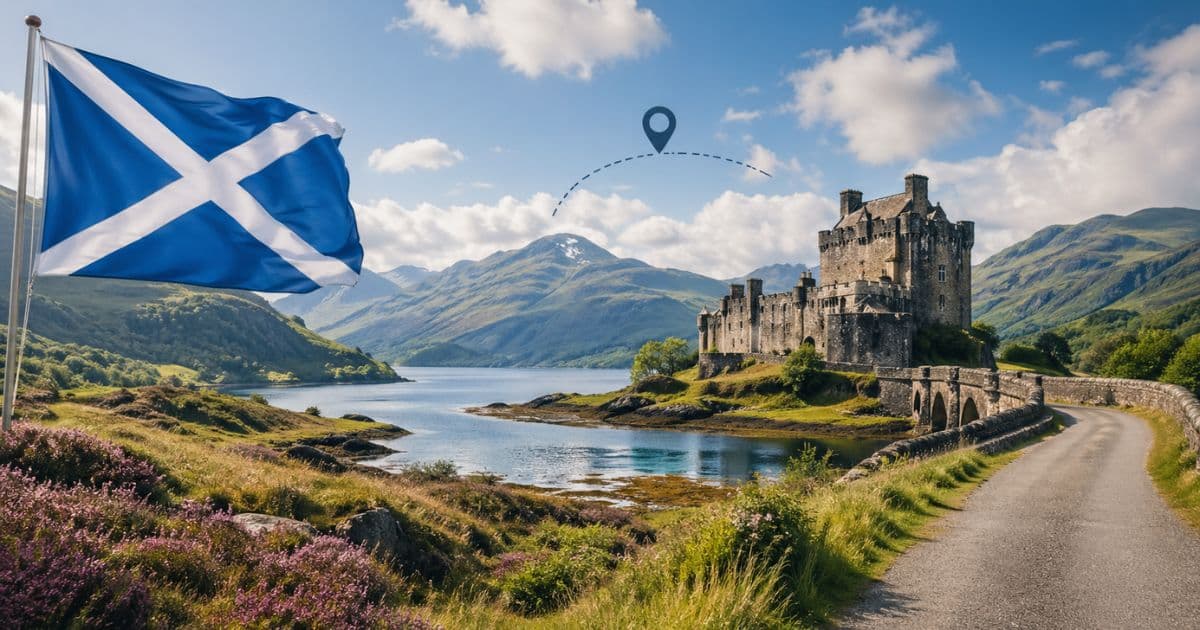
This Scotland travel itinerary guide is built for anyone who wants to explore one of the most dramatic and beautiful countries in Europe. Scotland is a land of ancient castles, misty highlands, dark lochs, and rugged coastlines that seem almost too beautiful to be real. Whether you have seen it in photographs or heard about it from a friend, Scotland has a way of staying in your mind long before you ever visit.

From the medieval streets of Edinburgh to the wild landscapes of the Isle of Skye, Scotland packs an extraordinary range of experiences into a relatively small area. In this guide, you will find a day-by-day itinerary, the best places to visit, practical planning tips, and advice on how to make the most of your trip whether you are travelling solo, as a couple, or with family.

Scotland Travel Itinerary Guide – Quick Overview

Scotland is the northern part of Great Britain and shares a land border with England to the south. It has a population of around 5.5 million people and covers a diverse range of landscapes – from lowland cities to the dramatic peaks and glens of the Highlands.

Scotland is particularly popular for road trips, as the country's rural scenery is best experienced by driving through it at your own pace. The North Coast 500 route, often called Scotland's answer to Route 66, is one of the most celebrated road trip routes in the world.

Scotland is ideal for:

  • Road trip enthusiasts and adventure travellers
  • Nature and wildlife lovers
  • History and castle explorers
  • Photography and landscape travellers
  • Couples, solo travellers, and small families

Best Places to Visit in Scotland

Scotland has dozens of incredible destinations, but these are the ones that should be at the top of every first-time visitor's list.

Edinburgh

Edinburgh is Scotland's capital and one of the most visually stunning cities in all of Europe. It is compact enough to explore on foot but rich enough in history and culture to keep you busy for several days.

  • Edinburgh Castle: Sitting on volcanic rock above the city, the castle is the most visited paid attraction in Scotland. It houses the Scottish Crown Jewels and offers sweeping views of the city below.
  • The Royal Mile: The main street of Edinburgh's Old Town, connecting the castle to the Palace of Holyroodhouse. It is lined with independent shops, historic closes (narrow alleyways), whisky bars, and street performers.
  • Arthur's Seat: An ancient extinct volcano within Holyrood Park, right in the heart of the city. The 45–60 minute hike to the summit rewards you with one of the best views in Scotland.

Edinburgh is also home to the world's largest arts festival – the Edinburgh Festival Fringe – held every August. If you visit during this time, the city transforms into a giant outdoor performance space.

Glasgow

Glasgow is Scotland's largest city and has a reputation that has shifted dramatically over the past two decades. Once known for industrial decline, it is now one of the most vibrant and culturally rich cities in the UK.

  • Museums: Glasgow has some of the best free museums in the UK. The Kelvingrove Art Gallery and Museum is one of Scotland's most visited attractions and houses an extraordinary collection of art and artefacts.
  • Art and culture: The city has a thriving independent art scene, with galleries, street art, and music venues spread throughout the West End and the city centre.
  • City life: Merchant City is the heart of Glasgow's dining and nightlife scene. The food here is excellent, with a wide range of Scottish, Indian, and international restaurants.

Isle of Skye

The Isle of Skye is without doubt one of the most photographed and most talked-about destinations in Scotland. It is a large island off the northwest coast of Scotland, connected to the mainland by a road bridge.

  • Fairy Pools: A series of crystal-clear, turquoise pools and waterfalls at the foot of the Cuillin mountains. The short walk to the pools passes through some of the most breathtaking scenery you will find anywhere in the country.
  • Old Man of Storr: A distinctive rocky pinnacle on the Trotternish Peninsula. The hike to the viewpoint takes around 1.5 hours and is one of the most iconic walks on the island.
  • Scenic landscapes: Skye is full of dramatic scenery at every turn – rugged sea cliffs, ancient brochs, medieval castles like Eilean Donan just before you reach the island, and spectacular sunsets that last well into the evening during summer.

Loch Ness and Inverness

Loch Ness is one of the most famous lakes in the world, known globally for the legend of the Loch Ness Monster. Whether or not you believe in Nessie, the loch itself is genuinely spectacular – dark, deep, and surrounded by forest and highland scenery.

  • Loch Ness: Take a boat cruise on the loch for the best views. Urquhart Castle, partially ruined but incredibly atmospheric, sits right on the shore and is a highlight of any visit.
  • The Highlands: The area around Loch Ness and Inverness is the gateway to the wider Scottish Highlands. The landscape of open moorland, dramatic glens, and distant peaks is unlike anything else in the UK.
  • Inverness town: The capital of the Highlands is a pleasant, compact city with a good selection of restaurants, a Victorian market, and Inverness Castle overlooking the River Ness. It makes an excellent base for exploring the surrounding area.

Scotland Travel Itinerary – Day-Wise Plan

7-Day Scotland Itinerary for Tourists

This 7-day Scotland travel itinerary covers the highlights of the country and is designed to give you a balanced mix of city culture, highland scenery, and coastal landscapes.

  • Day 1–2 – Edinburgh: Arrive in Edinburgh and spend two full days exploring the city. Visit Edinburgh Castle and walk the Royal Mile on day one. On day two, hike up Arthur's Seat in the morning and explore the Scottish National Museum and the Grassmarket area in the afternoon. Try a traditional Scottish meal – haggis, neeps and tatties – at a local pub in the Old Town.
  • Day 3 – Glasgow: Take a 50-minute train from Edinburgh to Glasgow. Spend the day at Kelvingrove Museum, walk through the West End, and explore the city centre. Glasgow has excellent food options, so use the evening to try the local dining scene before taking an overnight or early morning train the next day.
  • Day 4–5 – Isle of Skye: Travel from Glasgow to the Isle of Skye. The journey takes approximately 3.5–4 hours by car or a combination of train to Kyle of Lochalsh and local bus. On day four, visit Eilean Donan Castle on the way and settle into your accommodation. On day five, explore the Fairy Pools in the morning and the Old Man of Storr in the afternoon. The light on Skye in the late evening is extraordinary.
  • Day 6 – Loch Ness and the Highlands: Drive or take a bus east from Skye toward Inverness, stopping at Loch Ness along the way. Visit Urquhart Castle and take a short boat cruise on the loch. Spend the evening in Inverness, exploring the town centre and the riverside.
  • Day 7 – Return: Depending on your flight, take a morning train from Inverness back to Edinburgh (approximately 3.5 hours) or fly from Inverness Airport. If you have time before your departure, revisit any favourite spot in Edinburgh or pick up last-minute Scottish gifts on the Royal Mile.

This itinerary works best when travelling by hire car, especially for Skye and the Highlands. If you are not comfortable driving on the left, a combination of trains and local buses can cover most of this route, though it requires more planning.

For travellers who want to extend their Scotland trip into England, the UK travel guide for beginners covers London, Manchester, and other top destinations that pair well with a Scotland itinerary.

Best Time to Visit Scotland

Scotland's weather is famously changeable, and the best time to visit depends on what kind of experience you are looking for.

  • Summer (June to August): This is the most popular and generally the best time to visit Scotland. Days are very long – in June, it can stay light until 10 or 11 pm in the north – and the weather is at its warmest, though rain is still possible. Skye and the Highlands are at their most accessible. This is also the busiest and most expensive period, so book accommodation well in advance.
  • Spring (March to May) and Autumn (September to November): Both seasons offer fewer crowds, lower prices, and often beautiful weather with golden light that is particularly good for photography. Autumn colours in the Highlands are stunning from late September to October.
  • Winter (December to February): Scotland is cold, wet, and dark in winter. However, it can also be hauntingly beautiful – especially Edinburgh at Christmas and the snow-capped Highlands. Some remote roads and tourist sites close or have reduced hours in winter, so plan carefully.

How to Plan a Scotland Trip – Step-by-Step Guide

Here is a straightforward approach to Scotland trip planning that works for travellers from India and elsewhere.

  • Step 1 – Decide your budget: Scotland is a mid-to-high-cost destination. Budget travellers can manage on £60–80 per day staying in hostels and eating economically. Mid-range travellers should budget £120–180 per day. Factor in car hire if you plan to drive.
  • Step 2 – Choose your destinations: For a 7-day trip, stick to Edinburgh, Glasgow, Skye, and Inverness. Trying to cover too much leads to rushed visits and long driving days.
  • Step 3 – Book your transport: If hiring a car, book early through comparison sites. Trains are available between major cities through ScotRail. For remote areas like Skye, a car gives you far more flexibility.
  • Step 4 – Book accommodation: Accommodation in Edinburgh and on Skye fills up fast in summer. Book at least 2–3 months in advance for peak season travel. Inverness and Glasgow have more availability.
  • Step 5 – Plan your daily itinerary: Build some flexibility into each day. Scotland's weather can change rapidly and some of the best moments happen when you stop at an unexpected viewpoint or stumble into a local pub. Do not over-schedule.

Budget Travel Tips for Scotland

Scotland can be done affordably with the right approach. Here is how to keep costs down.

  • Book early: Train tickets, car hire, and popular accommodation get significantly more expensive closer to travel dates. Book 6–8 weeks in advance for the best rates.
  • Use public transport where possible: ScotRail offers a range of rail passes for tourists that give good value if you are travelling between cities. Citylink buses connect many towns and are cheaper than trains.
  • Stay in hostels: Scotland has an excellent network of youth hostels run by SYHA (Scottish Youth Hostels Association). They are clean, social, and well-located, with prices starting from around £20–25 per night.
  • Travel off-season: Visiting in May or September rather than July or August can cut accommodation costs by 30–40% and means you share famous viewpoints with far fewer people.
  • Take advantage of free attractions: Many of Scotland's best experiences are free – hiking Arthur's Seat, walking the Royal Mile, exploring Glasgow's museums, and driving through the Highlands cost nothing.

As a rough guide, Scotland travel cost for 7 days for a budget traveller ranges from Rs. 1,20,000 to Rs. 1,80,000 per person including flights from India, accommodation, food, and transport within Scotland.

Travel Tips for First-Time Visitors

Scotland can surprise you if you are not prepared. These tips will help you navigate the country confidently.

  • Weather changes quickly: Scotland is famous for experiencing four seasons in a single day. Always carry a waterproof layer, even in summer. This is especially important on Skye and in the Highlands where conditions can shift fast.
  • Pack warm clothes: Even in July, evenings in the Highlands can be cool. Bring layers, a warm mid-layer, and a wind-resistant jacket regardless of the season.
  • Follow driving rules: Scotland drives on the left. Many roads in rural areas are single-track with passing places – pull into these to let oncoming traffic pass. Drive slowly and patiently on highland roads.
  • Use cards for payment: Most places in Scotland accept contactless card payment. Carry a small amount of cash for remote areas, farm shops, and some smaller cafes that may not have card facilities.
  • Midges: In summer, the Scottish Highlands are home to midges – tiny biting insects that can be a real nuisance especially at dawn and dusk near water. Carry insect repellent and a midge net if you are camping or spending time outdoors in the evenings.

Latest Travel Trends in Scotland

Scotland's travel landscape is evolving. Here is what is shaping how people explore the country right now.

  • Road trips: The North Coast 500 has made Scotland one of the top road trip destinations in Europe. Travellers are increasingly renting campervans and spending a week or two circumnavigating the north of Scotland at their own pace.
  • Nature tourism: Scotland's rewilding projects and dark sky designations are drawing a new wave of eco-conscious travellers. Galloway Forest Park is one of the best places in the UK for stargazing.
  • Photography travel: Scotland has become a pilgrimage destination for landscape photographers. The Isle of Skye, Glen Coe, and the Quiraing are among the most photographed landscapes in Europe.
  • Solo travel: Scotland is consistently rated as one of the safest and most welcoming countries in Europe for solo travellers. Hostels, walking trails, and the friendly culture make it ideal for those travelling alone.

People Also Ask

How many days are enough for Scotland?
Seven days is a good starting point to cover Edinburgh, Glasgow, the Isle of Skye, and Loch Ness. For a more relaxed experience or to include the North Coast 500, plan for 10–14 days.

What is the best itinerary for Scotland?
The classic itinerary covers Edinburgh, Glasgow, the Isle of Skye, and Inverness. This route balances city culture with highland scenery and is well-suited for first-time visitors.

Is Scotland expensive to travel?
Scotland is moderately expensive compared to South and Southeast Asia but comparable to other Western European destinations. Budget travellers can manage well with careful planning, especially by using hostels and public transport.

What is the best month to visit Scotland?
June and July offer the best combination of weather and daylight. May and September are excellent alternatives with fewer crowds and more affordable prices.

Conclusion

Scotland is a destination that gets under your skin in a way that few places in the world do. The landscapes are breathtaking, the history is fascinating, and the people are genuinely welcoming. This Scotland travel itinerary guide has given you everything you need to plan a well-rounded trip – from the cobbled streets of Edinburgh to the wild cliffs of the Isle of Skye.

Whether you are planning a 7-day first visit or a longer road trip through the Highlands, Scotland will exceed your expectations. The key is to go with an open mind, pack for the weather, and leave enough room in your schedule to simply stop and take in the view.

If you are combining your Scotland trip with a wider UK holiday, the best places to visit in the UK covers England and Wales destinations that pair perfectly with a Scotland itinerary for a 2-week adventure.

Scotland is waiting for you – start planning your itinerary today and get ready for landscapes, history, and experiences that will stay with you long after you return home.

Frequently Asked Questions

Find answers to common questions

About the Author