HomeDestinationsContinentsCountriesBlog

South India Travel Guide – Best Places, Itinerary & Tips | Travel Nexus World

South India travel guide

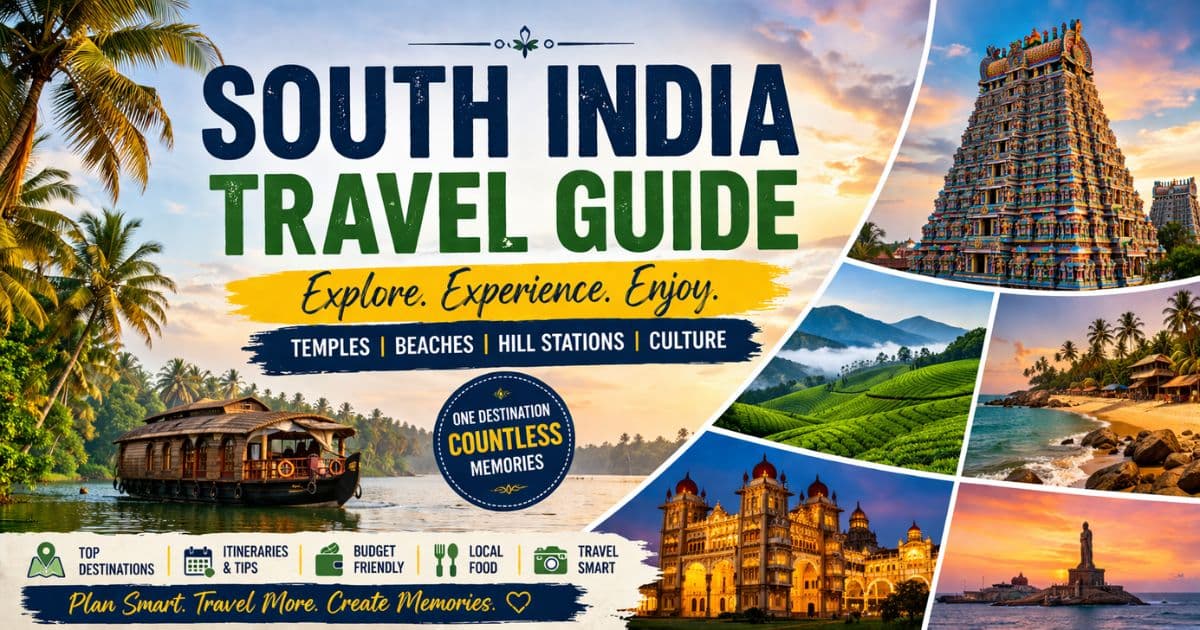
If you are planning your first trip to the southern part of the country, this South India travel guide will help you plan everything from start to finish. South India is one of the most diverse travel destinations in the world. From ancient temples and lush hill stations to serene backwaters and sun-soaked beaches, this region has something for every type of traveller.

Whether you are a solo backpacker, a couple looking for a romantic getaway, or a family wanting a memorable holiday, South India delivers. In this guide, you will learn the best places to visit, when to go, how to plan your trip, and how to keep costs low.

South India Travel Guide – Quick Overview

South India includes five major states: Kerala, Tamil Nadu, Karnataka, Andhra Pradesh, and Telangana. Together, these states form a region rich in culture, history, food, and natural beauty.

South India is famous for its Dravidian-style temples, UNESCO-listed monuments, wildlife sanctuaries, tea gardens, and Ayurvedic wellness retreats. Unlike North India, the south has its own distinct language, cuisine, and tradition.

This region is ideal for:

  • Nature and wildlife lovers
  • Beach and coastal travel
  • Spiritual and temple tourism
  • Hill station and trekking trips
  • Couples, solo travellers, and families

Best Places to Visit in South India

Choosing where to go is often the hardest part. Here is a state-wise breakdown of the top destinations.

Kerala – God's Own Country

Kerala is the most visited state in South India for a reason. It offers a unique mix of natural scenery, culture, and wellness experiences.

  • Backwaters: The backwaters of Alleppey (Alappuzha) are among the most iconic sights in India. A houseboat stay here is a once-in-a-lifetime experience.
  • Munnar: A high-altitude hill station covered in tea plantations. Perfect for trekking and enjoying cool weather.
  • Alleppey: Known as the Venice of the East, it is the gateway to Kerala's backwaters and boat races.
  • Beaches: Kovalam and Varkala are among the most popular beaches. Varkala is especially scenic with its cliffside views and clean waters.

Tamil Nadu

Tamil Nadu is the heart of Dravidian culture. Its towering temple gopurams (towers) and classical music and dance traditions make it a cultural treasure.

  • Madurai: The Meenakshi Amman Temple here is one of the most stunning temple complexes in India. A must-visit for spiritual travellers.
  • Ooty: A classic hill station popular with families and couples. The Nilgiri Mountain Railway (a UNESCO heritage site) is the highlight.
  • Kanyakumari: The southernmost tip of India, where three seas meet. The sunrise and sunset views are extraordinary.
  • Mahabalipuram: A coastal town with ancient rock-cut temples and shore temples. It is a UNESCO World Heritage Site.

Karnataka

Karnataka is a state that balances history, nature, and modern city life like no other in the south.

  • Coorg: Known as the Scotland of India, Coorg is covered in coffee plantations and misty hills. Perfect for a quiet, nature-filled retreat.
  • Hampi: A UNESCO World Heritage Site with magnificent ruins of the Vijayanagara Empire. History lovers will be amazed.
  • Mysore: Famous for the magnificent Mysore Palace and its grand Dasara celebrations. One of the cleanest and most well-planned cities in India.
  • Gokarna: A laid-back beach town popular with backpackers looking for an alternative to Goa. Has beautiful, less-crowded beaches.

Andhra Pradesh & Telangana

These two states are often overlooked by tourists, but they have a lot to offer.

  • Tirupati: Home to the Tirumala Venkateswara Temple, one of the most visited religious sites in the world. A spiritual experience unlike any other.
  • Hyderabad: A modern city with a rich Nizami heritage. Famous for its biryani, Charminar, Golconda Fort, and bustling bazaars.
  • Araku Valley: A scenic hill station in Andhra Pradesh surrounded by coffee estates and tribal culture. Still relatively unexplored and peaceful.

Top Cities to Visit in South India

If you are planning a city-based trip, here are the top urban destinations worth your time.

  • Bangalore: The Silicon Valley of India. Great for nightlife, food, and as a base for nearby hill stations like Coorg and Mysore.
  • Chennai: The cultural capital of Tamil Nadu. Known for its beaches, classical arts, and excellent South Indian food.
  • Hyderabad: A city that perfectly blends the old and the new. Biryani, IT hubs, and Mughal-era monuments all coexist here.
  • Kochi: A port city with a colonial past, thriving art scene, and excellent seafood. Fort Kochi is a must-explore area.
  • Mysore: Smaller than most cities on this list but incredibly charming. Ideal for a relaxed 2-day visit.

Best Time to Visit South India

Timing your trip right can make a huge difference to your experience.

  • Winter (October to March): This is the best time to visit South India. The weather is pleasant across most of the region, making it ideal for sightseeing, beaches, and temple visits. Tourist activity peaks between November and February.
  • Summer (April to June): Coastal areas and plains become very hot. However, hill stations like Ooty, Munnar, and Coorg remain pleasant and are popular during this time.
  • Monsoon (July to September): South India turns incredibly green during the rains. Kerala especially looks beautiful. This is also the best time for Ayurvedic treatments. However, outdoor activities and road travel can be disrupted.

How to Plan a South India Trip – Step-by-Step Guide

Planning well in advance saves both time and money. Here is a simple step-by-step approach to South India trip planning.

  • Step 1 – Decide your budget: South India can be done cheaply or luxuriously. Decide early whether you want budget travel, mid-range, or premium experiences.
  • Step 2 – Choose your destinations: Do not try to cover everything in one trip. Pick 3–4 destinations and explore them properly.
  • Step 3 – Book your transport: Indian Railways covers most major South Indian cities. Book train tickets at least 30–60 days in advance, especially for popular routes like Bangalore to Kochi or Chennai to Madurai.
  • Step 4 – Book hotels: Use trusted platforms or book directly. For popular destinations like Alleppey or Coorg, book well in advance during peak season.
  • Step 5 – Plan activities in advance: Some activities like houseboat stays, wildlife safaris, or Ayurvedic packages need prior booking. Do not leave these for the last minute.

South India Itinerary – Sample Plan

7-Day South India Itinerary for Tourists

This sample 7-day South India itinerary covers the highlights of Karnataka and Kerala, two of the most popular states for tourists.

  • Day 1–2 – Bangalore: Arrive in Bangalore. Visit Lalbagh Botanical Garden, Bangalore Palace, and MG Road. Enjoy local food at local restaurants. Use Bangalore as your entry point.
  • Day 3–4 – Coorg or Ooty: Take a bus or cab to Coorg (approximately 5–6 hours). Visit coffee estates, Abbey Falls, and Raja's Seat. Alternatively, travel to Ooty via Mysore and enjoy the Nilgiri Mountain Railway.
  • Day 5–6 – Kerala (Munnar and Alleppey): Head to Munnar for a day of tea gardens and scenic drives. Then travel to Alleppey for an overnight houseboat stay on the backwaters. This is the highlight of the trip for most visitors.
  • Day 7 – Return: Travel back to Kochi and fly home or take an overnight train to Bangalore or Chennai. Spend a few hours in Fort Kochi if time permits.

This itinerary works well for first-time visitors. For a deeper experience, consider extending to 10–12 days and including Tamil Nadu.

Budget Travel Tips for South India

Travelling South India does not have to be expensive. Here is how to keep costs low without missing out.

  • Use trains and buses: Indian Railways is affordable, comfortable, and covers almost every major destination. State-run buses are even cheaper for shorter routes.
  • Eat local food: South Indian meals (thalis, dosas, idlis) are cheap, delicious, and filling. A full meal at a local restaurant rarely costs more than 80–150 rupees.
  • Book early: Train tickets and popular hotels sell out fast during peak season. Booking 4–6 weeks in advance can save you a lot.
  • Use local transport: Auto-rickshaws and local buses are the cheapest way to move within cities. Avoid tourist cabs unless sharing with others.
  • Travel in groups: Splitting accommodation and cab costs with fellow travellers significantly reduces expenses.

For a rough estimate, South India travel cost for 7 days can range from Rs. 15,000 to Rs. 40,000 per person depending on accommodation choices and transport mode.

Travel Tips for First-Time Visitors

If this is your first trip to South India, keep these practical tips in mind.

  • Respect temple rules: Remove footwear before entering temples. Some temples do not allow non-Hindus inside the main sanctum. Dress modestly.
  • Dress appropriately: South India is conservative in smaller towns and religious sites. Carry a shawl or stole, especially when visiting temples.
  • Stay hydrated: The climate can be humid, especially in Kerala and coastal Tamil Nadu. Drink plenty of water and carry a bottle with you at all times.
  • Learn basic local words: Even a simple "Nandri" (thank you in Tamil) or "Nandi" (thank you in Kannada) goes a long way with locals.
  • Carry cash: Many smaller towns, temples, and local markets still prefer cash. Carry enough, especially when visiting remote areas.

Latest Travel Trends in South India

South India is evolving rapidly as a travel destination. Here are some trends shaping tourism in the region today.

  • Wellness tourism: Kerala has become one of the top Ayurveda and yoga destinations in Asia. Resorts offering Panchakarma treatments and meditation retreats are seeing growing demand from both Indian and international visitors.
  • Eco tourism: Places like Wayanad, Coorg, and the Andaman-adjacent areas of Tamil Nadu are seeing a rise in eco-lodges and responsible travel options. Travellers are increasingly choosing stays that support local communities.
  • Solo travel: South India is considered one of the safest regions for solo travel in India, especially for women. Solo travellers are increasingly choosing Kerala and Karnataka for their first independent trips.
  • Digital nomads: Cities like Bangalore and Kochi, and towns like Varkala and Pondicherry, are attracting remote workers looking for a mix of good connectivity, affordable living, and quality of life.

People Also Ask

What is the best place to visit in South India?
Kerala is widely considered the top destination in South India due to its backwaters, hill stations, beaches, and wellness tourism. However, Tamil Nadu and Karnataka are equally popular for their temples, history, and nature.

How many days are enough for a South India trip?
A minimum of 7 days is recommended to cover the highlights. For a more complete experience covering multiple states, plan for 10–14 days.

Is South India expensive to travel?
No, South India is one of the more affordable regions to travel in Asia. Budget travellers can manage comfortably on Rs. 1,500–2,500 per day including food, stay, and transport.

What is the best month to visit South India?
October to February is the best time to visit South India. The weather is cool and dry, making it perfect for outdoor sightseeing, temple visits, and beach trips.

Conclusion

South India is a destination that rewards every kind of traveller. Whether you are drawn to ancient temples, rolling hills, peaceful backwaters, or vibrant city life, you will find it all here. This South India tourism guide has covered the key destinations, practical planning steps, budget tips, and a ready-to-use itinerary to get you started.

The best part? South India is accessible, affordable, and endlessly fascinating. Once you visit, you will want to come back to explore more. Start with the 7-day itinerary, pick the destinations that excite you most, and build your trip around what matters to you.

If you are planning a Kerala-specific trip, exploring the Kerala backwaters travel guide will help you understand your houseboat options, best seasons, and local experiences in greater detail.

For travellers who want to focus on history and architecture, diving into the Karnataka heritage sites guide will help you plan visits to Hampi, Mysore, and Badami with ease.

Frequently Asked Questions

Find answers to common questions

About the Author

Related Posts

Travel Destination Comparison Guide: Budget, Experience & Tips

Travel Destination Comparison Guide: Budget, Experience & Tips

Compare top travel destinations like Bali, Maldives, Thailand & Dubai. Find the ...

Bali vs Philippines: Which Island Paradise Is Cheaper in 2026?

Bali vs Philippines: Which Island Paradise Is Cheaper in 2026?

Maldives vs Bali compare cost, beaches, culture & honeymoon value. Find out whic...

Journey Through the Silk Road: Discover Uzbekistan’s Most Stunning Destinations

Journey Through the Silk Road: Discover Uzbekistan’s Most Stunning Destinations

Uzbekistan, at the heart of the ancient Silk Road, is a land of stunning archite...