HomeDestinationsContinentsCountriesBlog
BlogTravel TipsThailand vs Vietnam: Which Is Better for Budget Travel in 2026?
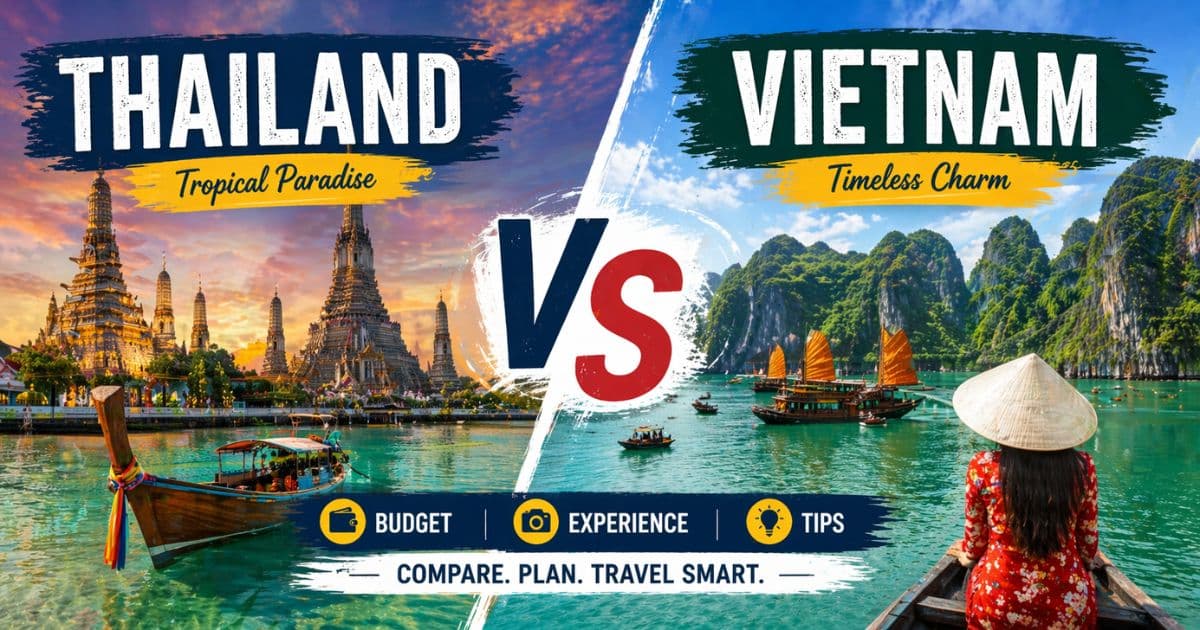
Thailand vs Vietnam: Which Is Better for Budget Travel in 2026?

Thailand vs Vietnam
Thailand vs Vietnam

If you are an Indian traveller planning a Southeast Asia trip on a budget, two destinations come up again and again: Thailand and Vietnam. Both are affordable, both are packed with incredible food, culture, beaches, and experiences, and both are well within reach for Indian passport holders without complicated visa processes. But when you actually sit down to plan, choosing between Thailand vs Vietnam is not as simple as it looks.

Thailand has been on the Indian travel radar for years. It is familiar, well-connected, and easy to navigate. Vietnam, on the other hand, is growing fast as a travel destination and is increasingly recognised as one of the most value-for-money countries in Asia. So which destination is better for budget travel in 2026? Which gives you more for your money? And which suits your specific travel style?

This guide answers all of those questions with an honest, practical, and detailed comparison of Thailand vs Vietnam across every factor that matters to a budget-conscious Indian traveller.

Overview of Both Destinations

Thailand

Thailand is a country in mainland Southeast Asia that has built one of the most well-developed tourism industries in the world. From the buzzing streets of Bangkok and the ancient temples of Chiang Mai to the world-famous islands of Phuket, Koh Samui, and Koh Phi Phi, Thailand offers an extraordinary range of experiences in one country. It has excellent infrastructure, a huge variety of accommodation at every price point, and a food culture that is globally celebrated. For Indian travellers, Thailand is often the first international destination they visit, and it rarely disappoints. It is safe, English-friendly, and built for tourists at every budget level.

Vietnam

Vietnam is a long, narrow country in Southeast Asia that stretches from the mountainous north near Hanoi all the way down to the tropical south around Ho Chi Minh City. Between these two ends lies an astonishing variety of landscapes, cultures, and experiences. Hoi An is a UNESCO World Heritage town with beautiful lantern-lit streets. Ha Long Bay is one of the most iconic natural wonders in Asia. Sapa in northern Vietnam offers spectacular terraced rice fields and trekking through hill tribe villages. Da Nang has beautiful beaches and is rapidly developing as a tourist city. Vietnam is increasingly popular with Indian travellers for its authenticity, affordability, and sheer variety. It is slightly less polished than Thailand in terms of tourist infrastructure, but that rawness is part of its charm.

Cost Comparison: Thailand vs Vietnam

Flights

Both Thailand and Vietnam are well connected from major Indian cities. Bangkok's Suvarnabhumi Airport receives direct flights from Delhi, Mumbai, Chennai, Bengaluru, Hyderabad, and Kolkata. Return fares typically range from Rs 15,000 to Rs 32,000 per person depending on the airline, season, and how early you book. Budget airlines like IndiGo, AirAsia, and Thai Airways offer competitive fares.

For Vietnam, the main entry points are Hanoi in the north and Ho Chi Minh City in the south. Direct flights from India are available but less frequent than those to Bangkok. You will often find better fares on one-stop flights via Singapore, Kuala Lumpur, or Bangkok. Return fares to Vietnam from India typically range from Rs 18,000 to Rs 38,000. In terms of flight cost alone, Thailand tends to be slightly cheaper and more convenient due to more direct flight options from India.

Hotels and Accommodation

Both countries offer outstanding value for accommodation. In Thailand, a clean and comfortable budget guesthouse or hostel dorm in Bangkok costs Rs 600 to Rs 1,500 per night. Mid-range hotels range from Rs 2,500 to Rs 6,000 per night. On popular islands like Phuket or Koh Samui, prices are higher, with decent mid-range options starting from Rs 4,000 to Rs 8,000 per night during peak season.

In Vietnam, accommodation is marginally cheaper. A good budget guesthouse in Hanoi or Ho Chi Minh City costs Rs 800 to Rs 2,000 per night. In Hoi An or Da Nang, beautiful boutique hotels are available for Rs 2,500 to Rs 5,000 per night. Vietnam's homestays and guesthouses in smaller towns often offer exceptional value with very good quality. For pure accommodation costs, Vietnam edges out Thailand, especially when you move beyond the big cities.

Food

This is where both countries truly shine, and this is also where the comparison gets exciting. Thai street food is legendary and genuinely cheap. A plate of Pad Thai or a bowl of Tom Yum soup from a Bangkok street stall costs Rs 120 to Rs 250. A proper sit-down meal at a local restaurant costs Rs 300 to Rs 600 per person. In tourist areas, prices are higher but still affordable by Indian standards.

Vietnamese street food is equally extraordinary and, if anything, slightly cheaper. A bowl of Pho in Hanoi costs Rs 80 to Rs 150. Banh Mi sandwiches cost Rs 60 to Rs 120. A full meal at a local Vietnamese restaurant rarely exceeds Rs 400 per person. The food in Vietnam is lighter and uses more fresh herbs and vegetables, while Thai food is bolder, spicier, and more aromatic. Both are world-class cuisines, but for pure budget eating, Vietnam has a very slight edge. For Indian taste preferences, Thai food tends to feel more familiar because of its bold spices, while Vietnamese food can take a little adjustment. Indian restaurants are available in tourist areas of both countries.

Local Transport

Getting around Thailand is easy and affordable. Bangkok has an excellent BTS Skytrain and MRT metro system. Tuk-tuks and metered taxis are everywhere. For intercity travel, trains, buses, and domestic flights all operate efficiently. A popular and cheap way to get between cities is the overnight sleeper train or bus, which saves both time and accommodation costs. For island travel, ferries and speedboats are well organised.

Vietnam is a long country, so transport between cities is an important cost factor. Domestic flights between Hanoi and Ho Chi Minh City cost Rs 2,000 to Rs 6,000 return if booked in advance on budget carriers like VietJet or Bamboo Airways. Trains and buses are cheaper but much slower. Within cities, ride-hailing apps like Grab work very well and are cheap. Renting a motorbike is popular for exploring smaller towns and the countryside at around Rs 500 to Rs 700 per day. Overall, domestic travel within Vietnam can add up more than in Thailand due to the geographic length of the country.

Experience Comparison

Beaches and Natural Attractions

Thailand has some of the most famous beaches in Southeast Asia. The Phi Phi Islands, Maya Bay, Railay Beach, and the Similan Islands are world-class destinations for swimming, snorkelling, and diving. The water is warm and clear, and the scenery is stunning. However, many of the most popular beaches are heavily crowded during peak season, and the commercial development around them can feel overwhelming.

Vietnam's beaches are less internationally famous but increasingly impressive. Da Nang's My Khe Beach is long, clean, and far less crowded. Phu Quoc island in southern Vietnam has beautiful clear water and a more relaxed atmosphere than Phuket. Ha Long Bay is one of Asia's most iconic natural landscapes, with thousands of limestone karsts rising from emerald green water. Vietnam offers natural beauty that feels less commercialised and more authentic than Thailand's most popular beach destinations.

Culture and Heritage

Both countries have deep and fascinating cultures, but Vietnam has a particularly rich layered history. The ancient town of Hoi An, the imperial city of Hue, the temples of My Son, and the war history of Ho Chi Minh City and the Cu Chi Tunnels offer genuinely moving and educational travel experiences. Hanoi's Old Quarter is one of the most atmospheric urban neighbourhoods in Asia.

Thailand's cultural highlights are equally impressive. The Grand Palace and Wat Pho in Bangkok, the old city temples of Chiang Mai, and the ancient ruins of Ayutthaya are must-visit experiences. Thai Buddhist culture is visible and alive in everyday life, from monks collecting alms at dawn to colourful temple festivals. Both countries offer excellent cultural tourism, but Vietnam's historical depth gives it a slight edge for travellers who love history and heritage.

Nightlife

Thailand is the clear winner for nightlife. Bangkok's Khao San Road and Sukhumvit area, Phuket's Patong Beach, and Koh Samui's Chaweng Beach all have thriving nightlife scenes with bars, beach clubs, live music, and street food markets that run until the early hours. The night markets in Chiang Mai are a gentler but equally vibrant version of Thailand's evening culture.

Vietnam has a growing nightlife scene, especially in Ho Chi Minh City's backpacker area on Bui Vien Street, which is lively and affordable. Hanoi's Old Quarter also has a pleasant bar and cafe street culture. However, Vietnam's nightlife overall is quieter and less developed than Thailand's. If parties, beach clubs, and late-night scenes are important to you, Thailand wins this comparison easily.

Activities and Adventure

Thailand offers world-class diving and snorkelling, elephant sanctuary visits, muay thai boxing experiences, cooking classes, temple tours, and trekking in the hill tribe villages around Chiang Mai. The variety is excellent and activities are well priced for tourists.

Vietnam's activity highlights include Ha Long Bay cruises, trekking in Sapa and Ha Giang, motorbike tours through the countryside, cooking classes in Hoi An, war history tours in Ho Chi Minh City, and sandboarding on the Mui Ne dunes. The Ha Giang Loop, a motorbike route through the mountains of northern Vietnam, is increasingly considered one of the best travel experiences in all of Asia. For adventure seekers and nature lovers, Vietnam offers experiences that are hard to find anywhere else.

Best For: Who Should Go Where

Budget Travellers

Vietnam is marginally better for pure budget travel, especially for longer trips of ten days or more. Daily expenses for food, accommodation, and local transport are slightly lower than in Thailand, and the overall travel experience is less commercialised. However, Thailand is more convenient for budget travellers on a shorter trip of five to seven days because flight connections are better and internal travel is easier to organise.

Honeymoon

Thailand is the more natural honeymoon choice between the two, thanks to its beautiful island resorts, romantic beach settings, and well-developed luxury options even at mid-range prices. Koh Lanta, Koh Yao Noi, and Krabi offer quiet, romantic settings for couples. Vietnam also has beautiful honeymoon spots, especially in Hoi An and Phu Quoc, but Thailand has a more established reputation as a romantic destination for Indian couples.

Solo Travel

Both countries are excellent for solo travel, but Thailand has a slight advantage because of its larger and more established backpacker community. Finding other travellers to meet and explore with is easier in Thailand. Vietnam is also very safe and welcoming for solo travellers, and the Ha Giang Loop in particular is a legendary solo travel experience. For first-time solo international travellers, Thailand is the more comfortable and familiar starting point.

Family Trips

Thailand is generally better for family trips due to its more developed tourist infrastructure, wider variety of family-friendly attractions, theme parks, and the ease of getting around with children. Phuket and Pattaya have water parks, elephant parks, and activities specifically designed for families. Vietnam is also a good family destination, but the longer travel distances between key sights and the more adventurous nature of some experiences make it slightly less ideal for trips with young children.

Pros and Cons

Thailand: Pros

  • More direct flights from India with competitive fares on multiple airlines
  • Excellent tourism infrastructure making it easy to travel independently
  • World-famous beaches and islands with warm, clear water
  • Vibrant nightlife and food markets that run late into the night
  • Wide range of accommodation from budget hostels to luxury resorts
  • Familiar and beginner-friendly for first-time international travellers from India

Thailand: Cons

  • Over-tourism in popular spots like Phi Phi Islands and Patong Beach
  • Slightly higher daily costs than Vietnam in food and accommodation
  • Tourist traps are common in Bangkok and major beach destinations
  • Some areas feel very commercialised and less authentic

Vietnam: Pros

  • Marginally cheaper overall for food, accommodation, and daily expenses
  • Rich history and authentic cultural experiences that feel genuine
  • Spectacular natural landscapes including Ha Long Bay, Sapa, and Ha Giang
  • Less crowded than Thailand in most destinations outside of peak season
  • Unique adventure experiences like the Ha Giang Loop that are hard to find elsewhere

Vietnam: Cons

  • Fewer direct flights from India with higher fares in some seasons
  • Long geographic length means domestic travel adds time and cost
  • Less developed nightlife compared to Thailand
  • Food adjustment needed for some Indian palates used to bolder spices
  • Tourist infrastructure is less polished in smaller towns and rural areas

Which One Should You Choose?

The honest answer is that both Thailand and Vietnam are outstanding budget travel destinations, and either choice will give you an incredible experience. But the right choice depends on what kind of traveller you are.

Choose Thailand if you are a first-time international traveller looking for a smooth and easy trip, if beaches and nightlife are high on your priority list, if you are travelling with family or as a couple and want well-organised tourist experiences, or if you only have five to seven days and want to maximise your time without complicated travel planning. Thailand is more forgiving for beginners and rewards travellers who want comfort and convenience alongside great experiences.

Choose Vietnam if you are an experienced traveller looking for something more authentic and off the beaten path, if history, culture, and natural landscapes excite you more than beach clubs and nightlife, if you are travelling for ten days or more and want to explore a destination in real depth, or if budget is your top priority and you want to stretch every rupee as far as possible. Vietnam rewards travellers who are willing to put in a little more planning and effort with experiences that feel genuinely memorable and unique.

If you cannot decide, consider doing both. A two-week trip combining southern Vietnam with a few days in Bangkok or a Thai island is entirely doable and gives you the best of both destinations in a single holiday.

Conclusion

The Thailand vs Vietnam debate is one of the most enjoyable planning dilemmas in Asian travel, and that is because both countries are genuinely exceptional. Thailand is easier, more familiar, and better for first-timers, beach lovers, and those who want a polished holiday experience without too much planning effort. Vietnam is more authentic, slightly cheaper, and deeply rewarding for travellers who want to go beyond the obvious and discover one of Asia's most historically and naturally rich countries.

For pure budget travel over a longer trip, Vietnam edges ahead. For a short, convenient, and relaxed holiday that delivers reliable highlights, Thailand is the safer and smarter choice. Either way, you are choosing a destination that will give you incredible food, warm hospitality, and memories worth having.

The most important thing is to stop overthinking and start booking. Both countries welcome Indian tourists warmly, both are safe and affordable, and both will reward you generously for choosing them. Plan your trip carefully, travel with an open mind, and enjoy every moment of Southeast Asia's very best.

Also read: Travel Destination Comparison Guide: Budget, Experience and Tips for a complete overview of top destinations and expert advice on choosing the right one for your next international trip. You may also enjoy our detailed article on Maldives vs Bali if you are considering a beach-focused holiday in Asia.

Frequently Asked Questions

Find answers to common questions

About the Author

Related Posts

Dubai vs Turkey: Which Destination Should You Choose in 2026?

Dubai vs Turkey: Which Destination Should You Choose in 2026?

Dubai vs Turkey compare cost, culture, food & experiences for Indian travellers....

Travel Destination Comparison Guide: Budget, Experience & Tips

Travel Destination Comparison Guide: Budget, Experience & Tips

Compare top travel destinations like Bali, Maldives, Thailand & Dubai. Find the ...

Best Hiking Trails in the World: Patagonia, New Zealand, Switzerland, and Nepal

Best Hiking Trails in the World: Patagonia, New Zealand, Switzerland, and Nepal

Discover the world’s most spectacular hiking destinations with this guide to Pat...