
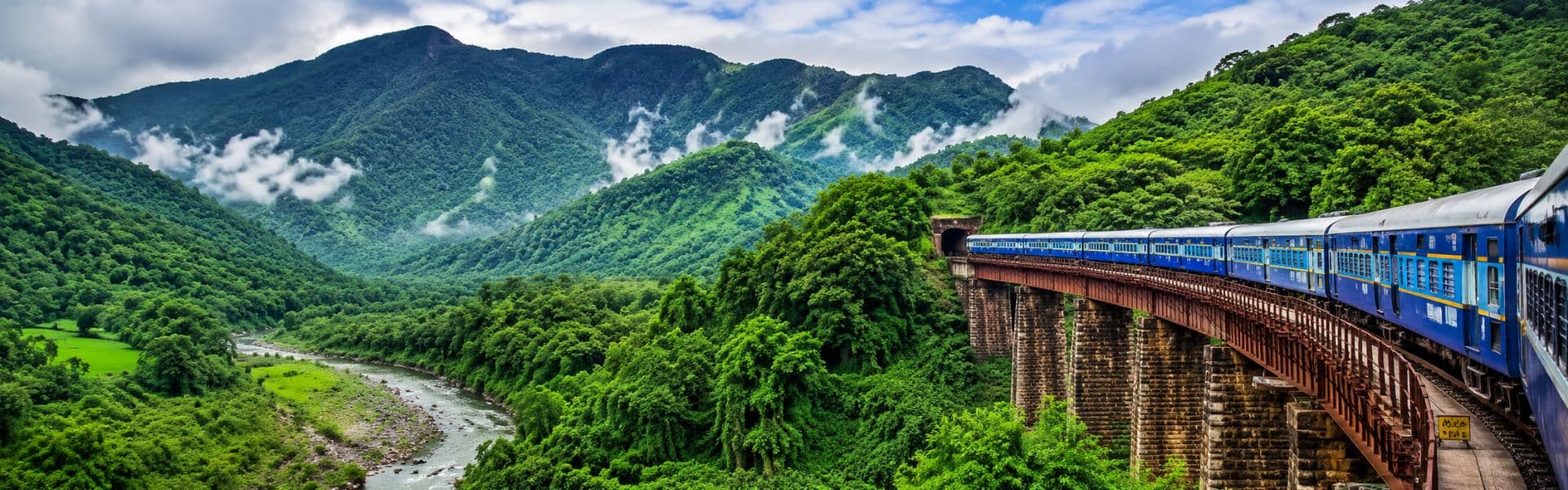
Araku Valley sits in the Eastern Ghats of Andhra Pradesh, about 120 km inland from Visakhapatnam, at an elevation that keeps it noticeably cooler than the coast. Most people come for one specific reason the train journey up from Vizag, threading through dozens of tunnels and bridges and stay for the coffee plantations, tribal culture, and caves that fill out the rest of the trip. This guide covers how to do the journey properly, what's worth stopping for along the way, and how to plan a day trip or overnight stay.
Why Visit Araku Valley
The valley is one of India's lesser-known coffee-growing regions Araku coffee is grown by tribal farmers under the shade of jackfruit, silver oak, and mango trees, and it's built a real reputation for quality rather than just being a novelty crop. Combine that with the Eastern Ghats scenery, the Borra Caves, and a tribal museum that gives genuine context to the indigenous communities of the region, and Araku works as a destination with more depth than the typical hill-station day trip.
The Vizag to Araku Train Journey
This is the centrepiece of most Araku trips. The route runs from Visakhapatnam through the Eastern Ghats via a long series of tunnels and bridges, climbing steadily into the hills the journey takes around four hours. The Vistadome coach, where available, has large windows and rotating seats designed for scenic routes like this one, and it's worth booking specifically if you want the best views; regular coaches cover the same route but without the same visibility. Because demand is high and fares and schedules can change, book your seats in advance through official railway booking channels rather than assuming availability on the day.
Best Things to Do in Araku Valley
Borra Caves
Large limestone caves en route between Vizag and Araku, known for their stalactite and stalagmite formations built up over thousands of years. This is usually the first major stop for anyone travelling by road, and it's worth the detour even if you're doing the rest of the trip by train.
Araku Tribal Museum
A museum dedicated to the indigenous tribal communities of the Eastern Ghats, covering their traditions, art, and way of life. It's a useful stop for context before or after visiting the coffee plantations, since much of the region's coffee farming is tribal-run.
Ananthagiri Coffee Plantations
The hills around Ananthagiri, between Vizag and Araku, are where much of the region's coffee is grown. Walking through the plantations gives a much clearer sense of how Araku coffee is actually produced than just drinking a cup of it later.
Katiki Waterfalls
A short trek from the main road near Borra Caves leads to Katiki Waterfalls, a manageable stop if you want a bit of walking built into the day rather than sightseeing exclusively from a vehicle.
Galikonda Viewpoint
One of the higher points in the area, with wide views over the surrounding Eastern Ghats hills and valley. Best visited in clear weather, since cloud cover at elevation can limit visibility.
Padmapuram Botanical Gardens
A garden in Araku town itself, a straightforward, low-key stop if you have time left after the main attractions.
Best Time to Visit Araku Valley
October to March offers the most reliable weather, with cool temperatures that suit both the train journey and outdoor sightseeing. The monsoon months (roughly June to September) turn the valley intensely green, which has its own appeal, but hilly Eastern Ghats terrain means road and rail travel can be affected by heavier rain, so build some flexibility into your plans if you're visiting during this period.
How to Get to Araku Valley
- By train: The Vizag–Araku route is the classic approach, taking around four hours through the Eastern Ghats. Book in advance, especially for Vistadome seats.
- By road: A drive from Visakhapatnam takes a similar amount of time and lets you stop freely at Borra Caves, Ananthagiri, and viewpoints along the way many visitors take the train up and return by road, or the reverse.
How Many Days Do You Need
A single, well-organised day trip from Visakhapatnam can cover the train ride, Borra Caves, and the main sights in Araku, though it makes for a long day. Staying one night in Araku takes the pressure off and allows a more relaxed pace through the coffee plantations and tribal museum without rushing back for a return train or drive.
Food and Local Specialities
Bamboo chicken chicken marinated and cooked inside a bamboo stalk over an open flame is the dish most associated with the region and worth seeking out at a local eatery rather than a generic hotel restaurant. Araku coffee is the other must-try, and buying a bag of beans or ground coffee from a local grower or the tribal cooperative outlets is a better souvenir than most.
Travel Tips
- Book train tickets, especially Vistadome seats, well ahead of your visit this route is popular enough that seats sell out.
- If you're prone to motion sickness, note that the road route has a fair number of hairpin bends through the ghats.
- Carry a light jacket even outside winter elevation keeps mornings and evenings cooler than the Andhra coast.
- If you want to see all the major sights without rushing, staying overnight beats attempting everything in a single day trip.
Common Mistakes to Avoid
- Booking the train without checking whether Vistadome coaches are running that day availability can vary, so confirm before you build your day around it.
- Treating Araku as only a coffee stop and skipping the tribal museum, which adds real context to the region.
- Underestimating travel time on the road route the ghat sections take longer than the distance on a map suggests.
- Visiting during heavy monsoon without a backup plan, given the possibility of transport disruption in hilly terrain.
Is Araku Valley Good for Families?
Yes the train journey in particular is a genuinely enjoyable experience for children, and most of the sights (caves, gardens, viewpoints) don't require serious physical exertion beyond some walking. It also works well for couples and solo travellers looking for a quieter alternative to the busier hill stations further south in India.
Combining Araku with the Rest of Andhra Pradesh
Araku pairs naturally with a longer Andhra Pradesh trip based out of Visakhapatnam. If your route also includes Tirupati, our guide to VIP Darshan booking at Tirupati is worth reading ahead of time if temple visits are part of your plan. For the wider region, our South India travel guide covers how to sequence a trip across multiple states.
Planning the Practical Side
If you're travelling on a budget, our budget travel tips for India cover general cost-saving strategies that apply well to a trip like this one. If your visit falls during the rainy season, our monsoon travel hacks and packing tips are worth a read before you go. A trip budget calculator and Itinerary Planner can help you work out costs and timing if Araku is one stop on a longer trip, and it's worth checking the weather forecast close to your travel dates given how much the ghat terrain is affected by rain.
Frequently Asked Questions
How long is the Vizag to Araku train journey?
Around four hours, running through a long series of tunnels and bridges as the train climbs into the Eastern Ghats.
What is Araku Valley famous for?
Its coffee, grown by tribal farmers in the surrounding hills, along with the scenic train route from Visakhapatnam, the Borra Caves, and its tribal museum and culture.
How many days do I need for Araku Valley?
A single long day trip from Visakhapatnam is possible, but staying one night allows a more comfortable pace through the main sights.
What is bamboo chicken?
A regional speciality where chicken is marinated and cooked inside a bamboo stalk over an open flame one of the dishes most associated with Araku Valley.
Is the Vistadome train worth booking?
If you want the best views on the Vizag–Araku route, yes it has larger windows and rotating seats designed for scenic journeys, though seats need to be booked in advance.
Is Araku Valley suitable for families?
Yes. The train ride is engaging for children, and most attractions involve manageable amounts of walking rather than strenuous activity.
What is the best time to visit Araku Valley?
October to March, for the most reliable weather. The monsoon makes the valley lush but can affect road and rail travel in the hills.