HomeDestinationsContinentsCountriesBlog

Hampi Travel Guide: Best Places, Itinerary, Budget and Travel Tips

Shailesh
Shailesh
Travel Guides
Hampi Travel Guide: Best Places, Itinerary, Budget and Travel Tips

This Hampi travel guide exists because Hampi is genuinely unlike anywhere else in India. You have ancient temple ruins sitting between enormous granite boulders, a river winding through the whole thing, and a backpacker culture that has grown quietly alongside all that history. It is a UNESCO World Heritage Site, a photographer's territory, a spiritual destination, and a budget traveler's favorite, all at once. If you have been wondering whether Hampi is worth the journey, the short answer is yes. This guide tells you everything you need to plan your trip properly.

Where is Hampi located?

Hampi in Karnataka

Hampi is in the Vijayanagara district of northern Karnataka, about 350 km from Bengaluru and around 74 km from Hospet, which is the nearest major town. The Tungabhadra River runs along its northern edge, separating the main ruins area from what travelers call Hippie Island (officially Virupapur Gadde).

The nearest airport is Jindal Vijayanagara Airport near Toranagallu, about 35 km away. Hospet Junction is the closest major railway station, roughly 13 km from Hampi Bazaar. Most travelers arrive by overnight train from Bengaluru, Hyderabad, or Goa.

History of Hampi

The Vijayanagara Empire

Hampi was the capital of the Vijayanagara Empire, one of the most powerful Hindu empires in South Indian history. At its peak in the 15th and early 16th centuries, it was one of the largest cities in the world, with a population estimated in the hundreds of thousands. The empire controlled much of peninsular India and was a major center of trade, culture, and temple construction.

In 1565, a coalition of Deccan sultanates defeated the Vijayanagara army at the Battle of Talikota. The city was looted and largely destroyed over several months. What survived is what you see today: hundreds of temple structures, royal pavilions, water systems, and market ruins spread across 4,100 hectares.

UNESCO designated Hampi a World Heritage Site in 1986. The site is officially called the Group of Monuments at Hampi and is protected under the Archaeological Survey of India.

Why visit Hampi?

Hampi does something to people. Travelers plan three days and end up staying ten. The combination of ancient ruins, strange boulder landscapes, the slow pace of the riverside, and the relatively low cost of living here creates an environment that is hard to leave.

The ruins are extraordinary on their own terms. But the boulders are what make Hampi visually unlike any other heritage site in India. These are massive granite formations that look deliberately stacked, like something out of a science fiction film. Walking between them in the early morning before the heat sets in is a genuinely memorable experience.

Hampi also has a strong backpacker culture, particularly on Hippie Island across the river. Affordable guesthouses, riverside cafes, hammocks, and a general atmosphere of slow travel have made it a well-established stop on the South India backpacker circuit.

Best time to visit Hampi

Winter season (October to February)

This is the best time, full stop. Temperatures stay between 15 and 30 degrees Celsius, the light is good for photography, and the ruins are comfortable to walk through without the sun making it miserable. December and January are the peak months, so expect more company at the major sites.

Monsoon season (June to September)

The boulders and ruins look dramatic in the rain, and the Tungabhadra turns a deep reddish brown. But some roads flood, coracle rides may be suspended, and the heat-humidity combination can be rough. If you want Hampi with fewer tourists and don't mind working around the weather, this works.

Summer (March to May)

Temperatures can cross 40 degrees Celsius. The ruins are exposed with very little shade. It is doable if you stick to early morning and late afternoon visits and rest through the middle of the day, but most travelers avoid this window.

Festival season

The Hampi Utsav, usually held in November, is a three-day cultural festival with music, dance, and illuminated monuments. It draws large crowds but is a good reason to visit if you want to see Hampi with some additional life around it.

How to reach Hampi

By train

The most practical route for most travelers. Hospet Junction is the nearest major station. Overnight trains run from Bengaluru (Hampi Express, around 9 hours), Hyderabad, and Vasco da Gama in Goa. From Hospet, auto-rickshaws and buses cover the 13 km to Hampi Bazaar.

By road

From Bengaluru, the drive is around 6 to 7 hours via NH 50. Buses from Bengaluru's Majestic Bus Terminal run to Hospet. Private cabs are an option if you are traveling in a group.

By bus

KSRTC runs direct overnight buses from Bengaluru to Hospet. Several private operators also run sleeper buses on this route. From Hospet, local transport takes you to Hampi Bazaar.

By air

Jindal Vijayanagara Airport near Toranagallu handles limited flights. Hubballi Airport is another option, about 160 km away. Flying into Bengaluru and taking a train or overnight bus is the more practical route for most people.

Best places to visit in Hampi

Hampi's monuments are spread across a large area. You will need a bicycle, auto-rickshaw, or moped to cover the major sites efficiently. Here are the ones worth prioritizing.

Virupaksha Temple

The functioning temple at the heart of Hampi Bazaar. It is dedicated to Lord Shiva and has been in continuous use for centuries. The main gopuram towers over the bazaar street. Go early in the morning when the rituals are happening and the light is good on the stonework.

Virupaksha Temple

Vittala Temple and the Stone Chariot

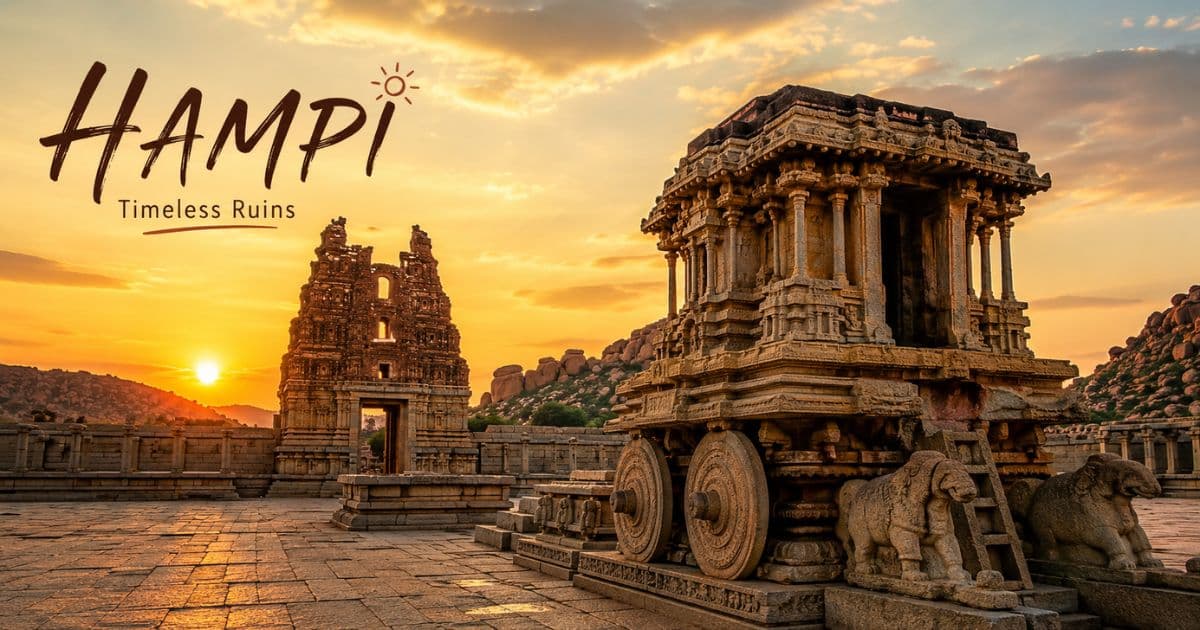
This is arguably the most important monument in Hampi. The Vittala Temple complex is about 2 km east of Hampi Bazaar and contains the famous Stone Chariot, a carved granite structure that appears on the old Indian 50-rupee note. The musical pillars inside the main hall produce different tones when tapped, though this is now discouraged to protect the stone. Entry fee applies; check current rates at the site.

Vittala Temple

Lotus Mahal

A graceful two-storey pavilion in the Zenana Enclosure, combining Hindu and Islamic architectural elements. It is one of the most elegant structures in Hampi and photographs well in the late afternoon light.

Lotus Mahal

Elephant Stables

A long row of eleven domed chambers that once housed the royal elephants. The scale of the building is impressive, and the mix of architectural styles across the individual domes is worth a close look.

Elephant Stables

Hemakuta Hill

A hill just south of the Virupaksha Temple covered with small temples and boulders. It is one of the Best Sunset Points in Hampi and a good place to get an elevated view of the bazaar and surrounding area. No entry fee.

Hemakuta Hill

Matanga Hill

The highest point in Hampi and the best sunrise spot. The climb takes around 20 to 30 minutes on a rocky path. Arrive before first light if you want to reach the top before the sun comes up. The 360-degree view from the summit is the best in the area.

Matanga Hill

Achyutaraya Temple

One of the larger temple complexes in Hampi and often less crowded than Vittala. Sits at the base of Matanga Hill. The scale of the courtyard and the quality of the stone carvings are impressive.

Achyutaraya Temple

Queen's Bath

A royal bathing complex with a large central pool, arched corridors, and balconies. It shows how the Vijayanagara rulers mixed practical architecture with decorative detail.

Queen's Bath

Hippie Island (Virupapur Gadde)

Across the Tungabhadra via coracle boat from the main bazaar area. This is where most backpackers stay. Quieter, greener, and a different atmosphere from the main ruins side. A good base if you plan to stay more than two or three days.

Hippie Island

Best things to do in Hampi

Coracle ride

A traditional round basket boat ride across the Tungabhadra. The main crossing point is near Virupaksha Temple. It is a short ride but a good experience, especially in the early morning when the river is quiet.

Cycling around the ruins

Renting a bicycle is one of the best ways to cover the monuments at your own pace. The terrain is mostly flat between the main sites. Bicycles are available for rent in Hampi Bazaar and on Hippie Island.

Sunrise at Matanga Hill and sunset at Hemakuta

Both are worth doing on separate days. Matanga for the panoramic sunrise, Hemakuta for the more accessible and atmospheric sunset view over the bazaar.

Temple exploration and Hampi history

Beyond the main ticketed sites, there are dozens of smaller temples and structures scattered across the landscape. Many have no entry fees and almost no visitors. Wandering between them, especially in the boulder fields to the east of the main area, is one of the genuinely rewarding things you can do here.

Best sunset points in Hampi

Hemakuta Hill is the most accessible and most popular. Anjaneya Hill, across the river on the Hippie Island side, requires a longer climb but offers a good western view. The riverside near the Virupaksha Temple is a quieter option for watching the sky change color over the water. Matanga Hill is primarily a sunrise spot but works for sunset too if you are willing to descend in the dark with a torch.

Best photography spots in Hampi

The Stone Chariot at Vittala Temple is the classic shot. The musical pillars and carved columns inside the temple complex are worth detailed close-up work. Hemakuta Hill gives you elevated views over the bazaar. The boulder fields east of Achyutaraya Temple are extraordinary for landscape photography, especially in the early morning when the light is low and the shadows are long.

For the Hampi photography spots that most people miss: the Tungabhadra riverbank near the Chakra Tirtha area in the early morning, and the narrow lane between the market ruins near Vittala when the late afternoon light comes through at an angle. Those two locations consistently produce the most interesting images.

Drone photography is subject to ASI regulations. Check current rules before flying. Many areas around protected monuments are no-fly zones.

Best cafes in Hampi

The cafe scene in Hampi is concentrated around Hampi Bazaar and Hippie Island. Mango Tree, on the riverside south of Virupaksha Temple, is the longest-running and most atmospheric of the lot. Bamboo-shaded seating, views of the river and boulders, and a standard backpacker menu of Indian, Israeli, and continental food.

On Hippie Island, several guesthouses run small attached cafes with similar menus. Laughing Buddha is well known and has a rooftop area. Most of these places are vegetarian or largely so, which fits both the spiritual character of the town and the budget traveler demographic.

For a proper South Indian meal at local prices, the small thali restaurants near the bus stand in Hampi Bazaar serve simple, filling food at a fraction of what the tourist cafes charge.

Where to stay in Hampi

Accommodation splits between the main bazaar side and Hippie Island. The bazaar side puts you within walking distance of Virupaksha Temple and the main sites. Hippie Island is quieter, greener, and better if you plan a longer stay or want a more relaxed atmosphere.

Budget guesthouses on both sides run from around Rs. 300 to Rs. 800 per night for a basic room. Dormitory beds in backpacker hostels go from Rs. 200 to Rs. 400. Mid-range hotels and heritage stays exist in and around Hospet if you want more comfort, though staying in Hampi itself is worth the trade-off.

Riverside rooms on Hippie Island book out quickly in peak season. If you are visiting between November and February, booking a few days in advance is sensible.

Hampi budget travel guide

Hampi is genuinely affordable, even by Indian standards.

  • Accommodation: Rs. 300 to Rs. 800 per night for budget rooms
  • Food: Rs. 150 to Rs. 400 per meal at tourist cafes; less at local restaurants
  • Bicycle rental: Rs. 100 to Rs. 150 per day
  • Auto-rickshaw for full-day site tour: Rs. 600 to Rs. 900 depending on route
  • Coracle ride: approximately Rs. 30 to Rs. 50 per person
  • Vittala Temple entry: check current ASI rates at the gate (fees change periodically)
  • Most other sites: free or Rs. 15 to Rs. 40

A backpacker spending carefully can manage Rs. 700 to Rs. 1,000 per day including accommodation, food, and transport. A more comfortable mid-range trip runs Rs. 1,500 to Rs. 2,500 per day.

Hampi 2-day itinerary

Day 1: Main ruins and the western group

Start at Matanga Hill before sunrise. Climb takes 20 to 30 minutes in the dark, so carry a torch. Watch the sun come up over the entire boulder landscape. Come down and have breakfast near the bazaar.

Spend the late morning at Virupaksha Temple, then walk or cycle east to Vittala Temple and the Stone Chariot. Allow at least 90 minutes here. Head back toward the bazaar via Achyutaraya Temple.

In the evening, climb Hemakuta Hill for sunset. Have dinner at Mango Tree or one of the riverside cafes.

Day 2: Royal enclosure, Hippie Island, and the river

Morning: Lotus Mahal, Elephant Stables, and Queen's Bath in the Royal Enclosure. These are close together and can be covered in about two hours.

Cross to Hippie Island via coracle after lunch. Walk or rent a bicycle to explore the quieter side of the river. Anjaneya Hill (believed to be the birthplace of Hanuman) is worth the climb for the view. Come back before dark via the last coracle crossing.

If you have a third day, use it for the boulder fields east of the main area, the Tungabhadra Dam (about 5 km from Hospet), and any smaller temples you missed.

Hampi travel tips

  • Carry cash. ATMs in Hampi Bazaar run out or malfunction regularly, especially during peak season. Withdraw what you need in Hospet.
  • The sun is intense even in winter. A hat, sunscreen, and a full water bottle are non-negotiable if you are walking between sites.
  • Light cotton clothes are practical. Some temples require covered shoulders and knees for entry.
  • Monkeys are present around the main temple areas. Do not leave food visible in bags.
  • The coracle crossing stops after dark. If you are on Hippie Island, make sure you are back before the last boat.
  • Hire a guide for Vittala Temple if you want to understand the history and iconography. Local guides are available near the entrance.

Hampi for backpackers

Hampi has been a backpacker staple for decades, and the infrastructure reflects that. Hostels with social common areas, cheap bicycle rentals, long-stay discounts at guesthouses, and a culture of travelers sharing information about lesser-known spots all make it easy to arrive with minimal planning and figure it out as you go.

The Hampi backpacking guide basics: stay on Hippie Island if you want the social atmosphere and slightly lower prices. Stay in Hampi Bazaar if you want to be close to the main ruins. Eat at local thali places to keep food costs down. Cycle everywhere you can. Talk to other travelers; the best information about hidden spots and current conditions comes from people who arrived a few days before you.

Solo travel in Hampi is very common and generally safe. The town is small enough that you will quickly recognize other travelers at the cafes and ruins. Standard precautions apply: secure your valuables, be careful on the boulder climbs after dark, and tell someone where you are going if you head out to more remote areas alone.

Final thoughts on visiting Hampi

Hampi rewards the traveler who slows down. The best moments here come from wandering into a temple nobody else is visiting, watching the light change over the boulders in the late afternoon, or sitting by the Tungabhadra with no particular plan. The ruins are the reason to come, but the pace is why people stay.

If you are a first-time visitor, two days is enough to see the major sites and get a feel for the place. If you are a photographer, a history enthusiast, or someone who travels specifically to find places that feel genuinely different from everywhere else, plan for more. Hampi earns the extra time.

Pair your Hampi trip with a visit to Badami Cave Temples Travel Guide about 140 km away for a fuller picture of Karnataka's ancient rock-cut architecture. And if you are already traveling through Karnataka, Chikmagalur Travel Guide covers a completely different side of the state worth combining into a longer trip.

Frequently Asked Questions

Find answers to common questions

About the Author

Shailesh

Travel enthusiast and digital content creator passionate about exploring destinations, travel tips, itineraries, and hidden gems around the world through practical and easy-to-follow travel guides.


Related Posts

Best Sunset Points in Hampi for Amazing Views & Photography

Best Sunset Points in Hampi for Amazing Views & Photography

Discover the best sunset points in Hampi including Matanga Hill, Hemakuta Hill a...

Chikmagalur Travel Guide: Best Places, Waterfalls & Coffee Estates

Chikmagalur Travel Guide: Best Places, Waterfalls & Coffee Estates

Explore Chikmagalur with this complete travel guide covering waterfalls, coffee ...

Badami Cave Temples Travel Guide: History, Timings & Best Places to Visit

Badami Cave Temples Travel Guide: History, Timings & Best Places to Visit

Explore Badami Cave Temples with this complete travel guide covering history, ti...